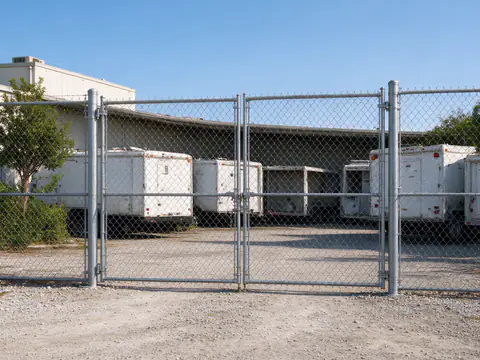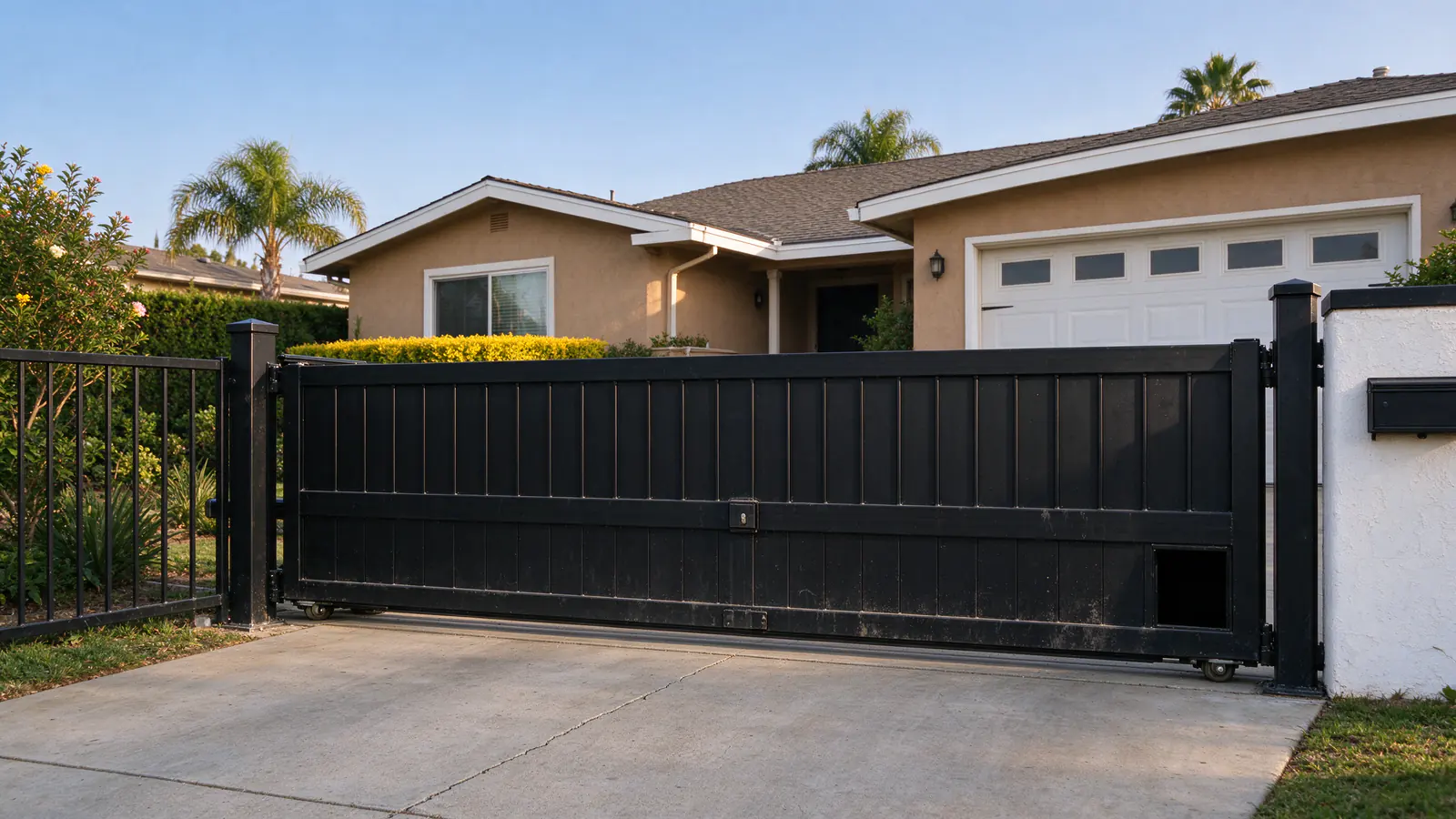
Your driveway gate is the biggest moving part of your fence, and the one you’ll use every day. Rancho Oxnard Fence plans and installs driveway gates around Oxnard and west Ventura County. Whether yours should swing or roll, where it sits and how it stands up to wind all depend on the driveway itself, so we measure the driveway before we suggest a gate.
Should your gate swing or roll?
Swing gates
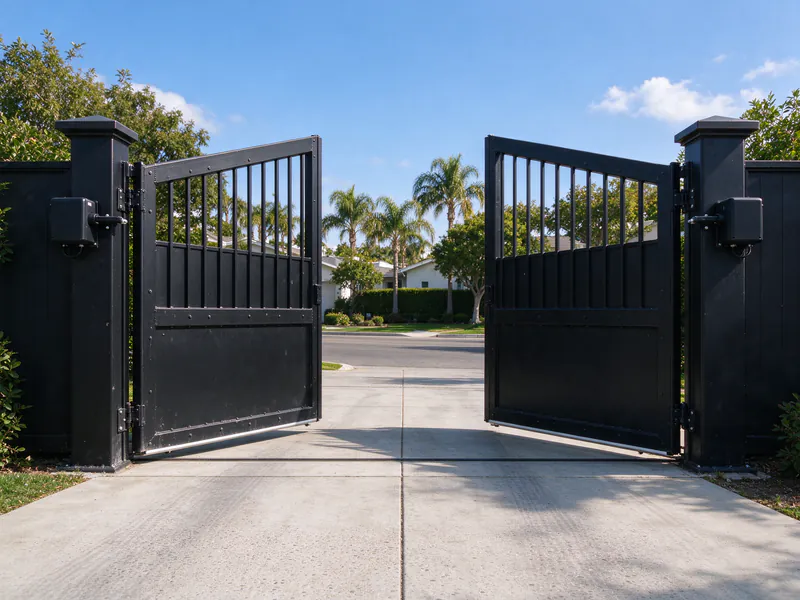
A swing gate is the simplest choice and usually costs less. Each leaf needs a clear, fairly level arc inside your property. If your driveway is short and slopes toward the street, a swing gate usually won’t work, because the leaves catch the ground or the car before they clear.
Rolling gates
A rolling gate slides along the fence line, so it suits short driveways and slopes. It needs wall or fence length beside the opening to slide into, called the runback, plus a track or a cantilever frame. Cantilever gates roll with no ground track, which suits gravel or spots where debris would jam a track.
The comparison table further down sums up the tradeoffs, and swing vs sliding gates goes deeper.
What we measure at your driveway
- The clear opening, not just post to post
- The slope across the swing or along the run
- How much runback you have for a rolling gate
- How far the gate would sit from the street and any setback
- Where power would come from for a future opener
- How exposed the spot is to wind
Your written estimate lists the layout, gate size, frame, posts or track, and hardware.
How far back does the gate have to sit?
In unincorporated areas such as El Rio and Nyeland Acres, Ventura County’s guidelines set three rules for vehicle access gates, manual or automatic:
- The gate sits at least 20 ft from the front or street-side setback
- A swing gate can’t swing into that 20 ft
- Access gates are at least 15 ft wide
That keeps your car off the street while the gate opens. Inside the City of Oxnard, we confirm gate rules for your address. See the Oxnard fence rules guide.
Which material fits your gate?
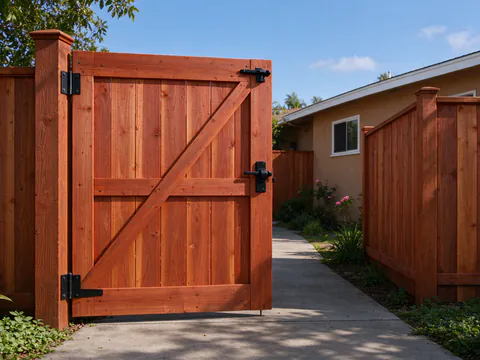
- Wood and vinyl suit lighter, shorter gates that match a wood or vinyl fence.
- Powder-coated aluminum stays light, won’t rust in salt air and suits wide openings.
- Steel is the strongest choice for very wide or security gates and needs coating care near the coast.
We build wide gates on frames sized to resist sagging. Much of central Oxnard is rated highly corrosive to uncoated steel, so we use stainless or coated hardware. See aluminum and iron fences.
Not sure which gate fits your driveway?
Send a photo from the street and the opening width, and we'll start there.
Will it hold up in the wind?
Wide solid gates catch a lot of wind. The National Weather Service has warned of damaging 50 to 70 mph northeast gusts on the Ventura County coastal plain. On exposed lots we:
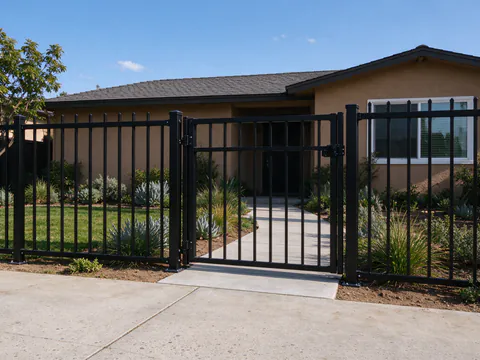
- Suggest open picket designs that let wind through
- Use heavier gate posts set deeper in Oxnard’s loose sand
- Add drop rods and a center stop to double swing gates so a leaf can’t swing into your parked car
- Fit gate stops that hold open leaves in place
A rolling gate presents one panel along the fence line and is easier to secure in wind. See Santa Ana winds and fences.
Why we set gate posts so deep
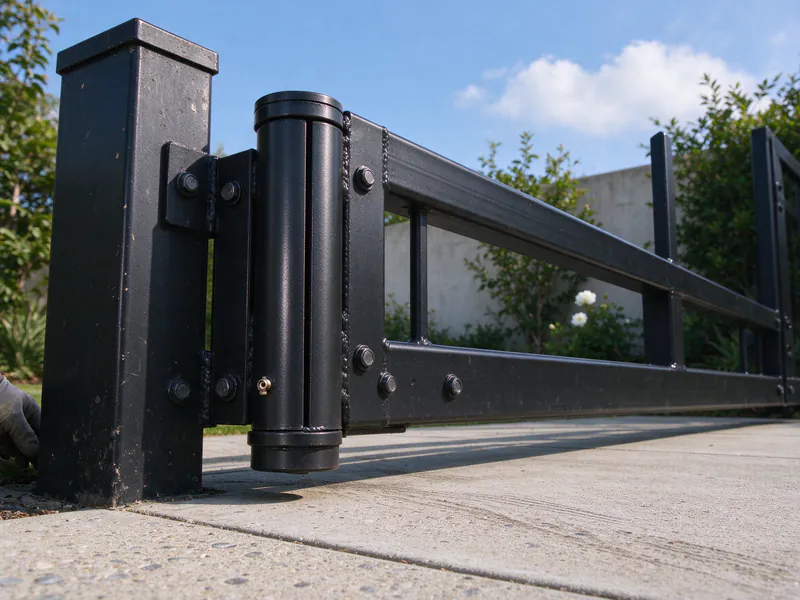
Swing gate posts carry the full weight of each leaf on two hinges, so they take more load than any other post. We use the heaviest posts on the job and set them in the largest footings, and in sand we go wider or deeper than in firm soil. Rolling gates spread the load onto a track or cantilever frame and guide posts. In the rainy months, we pour holes the day we dig them, and DigAlert marks are down at least two working days before.
Is your driveway short or sloped?
Many Oxnard and Ventura driveways slope toward the street or run only a car’s length from the sidewalk to the garage. A swing gate on a slope either drags at the end of its arc or has to hang high, leaving a gap underneath. A rolling gate runs level along the fence line beside the drive, so the slope doesn’t matter. On a short driveway, the space a swing leaf needs often decides it: if your car would sit where the gate swings, a rolling gate is the practical answer.
Living with your gate day to day
You’ll open and close a manual gate by hand every trip, so weight and latch height matter. Aluminum stays light enough to move easily; heavy steel or wood gates work better on rollers or with an opener. Gate stops hold an open leaf against the wind, and a cane bolt or drop rod keeps a parked leaf from wandering. Tell us if you want a latch you can reach from the car window, and we’ll place it there.
Privacy or a view of the street?
Open picket gates let you see the street from the house and let others see in, which some owners like. Solid gates hide cars and storage but catch more wind. Taller gates and heavier frames add security; anything that changes the height near the street we check against the rule for your address.
Planning for an opener
This page covers the gate itself. If you might want an automatic opener later, we build the gate for it: posts and frames sized for an operator, a closing edge planned, and conduit laid while the footings go in. Wiring for a future opener costs less to plan now than to trench in later.
What does a driveway gate cost?
We price driveway gates per gate, not per foot, because width, material, swing or roll, frame and hardware vary so much. Your estimate itemizes the gate, posts or track, hardware and any conduit. For fences, our typical ranges are in the Oxnard fence cost guide.
Is your gate sagging or sticking?
Driveway gates sag when hinge posts lean or frames rack, and rolling gates bind when tracks shift or wheels wear. We reset posts, brace frames, replace wheels and guides and realign latches. See the sagging gate guide and gate installation and repair. For yards and business entrances, see commercial fencing.