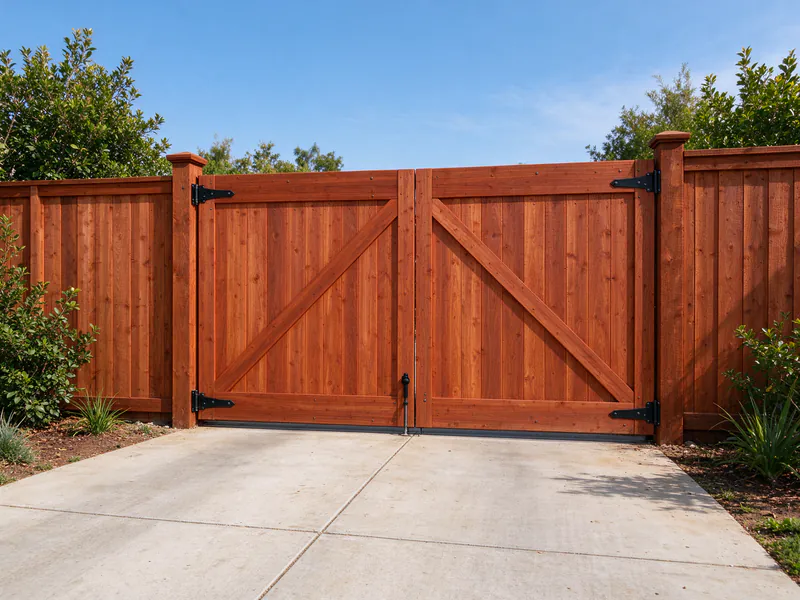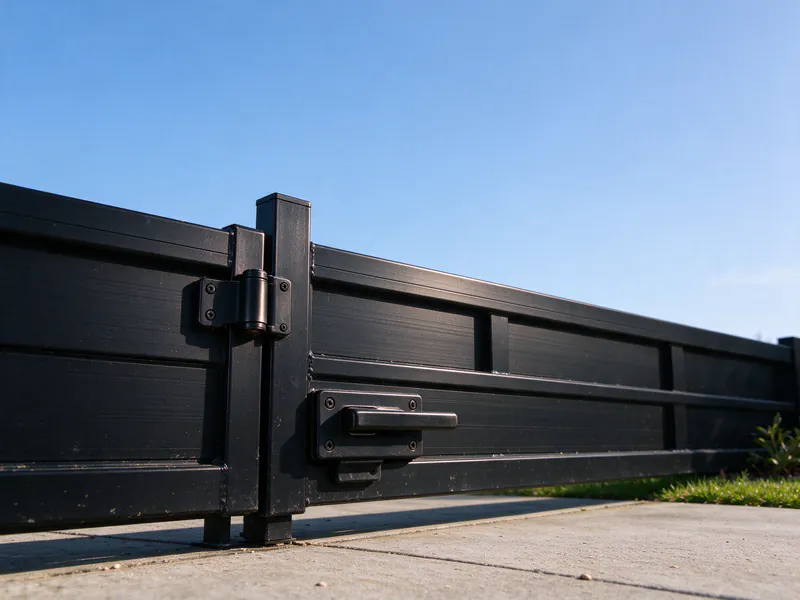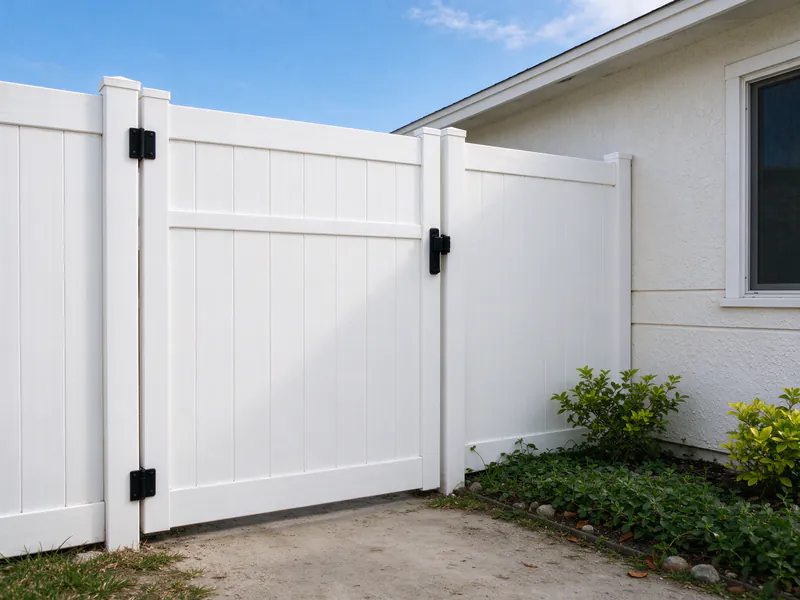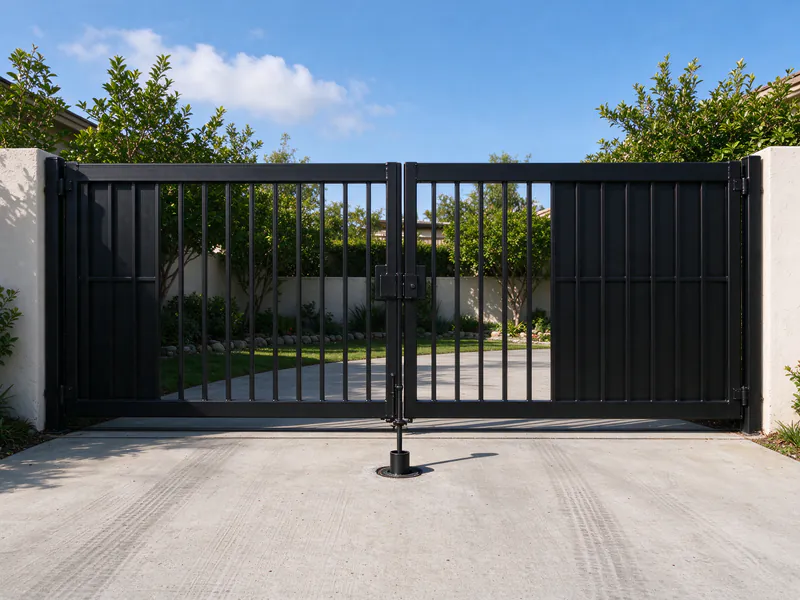
Gate dragging, sagging or swinging open in the wind? Rancho Oxnard Fence builds and repairs gates across Oxnard. A gate works harder than any other part of your fence: it swings, takes the wind, gets leaned on and slammed. Most gate trouble starts with the post it hangs on, so we plan the post before the gate.
Planning your new gate
When we walk your property, we settle:
- Where it goes. Side yard, back corner, driveway or pool.
- How wide. Wide enough for the biggest thing you will push through, not just for people.
- Which way it swings. Usually into your property, toward level, clear ground.
- The latch. Gravity, lockable, keyed, or self-latching for a pool.
- The material. Matched to your fence: wood, vinyl, chain link, aluminum or steel.
Your written estimate lists the gate width, post size, frame, hinges and latch, so you can see what carries the weight.
Why the post matters most
A fence post only holds itself up. A gate post holds itself up and carries a gate that pulls sideways every time you open it. That is why we use heavier hinge posts in bigger footings.
In Oxnard the ground makes this matter even more. Much of central and south Oxnard is loose, poorly drained sand with a winter water table that can be about 2.5 ft down. Sand grips a post less than firm soil, so we make gate footings wider or deeper, and in the rainy months we dig and pour the same day. See fence posts in sandy soil.
How we keep your gate square
A gate frame wants to drop at the latch end under its own weight. We stop that three ways:
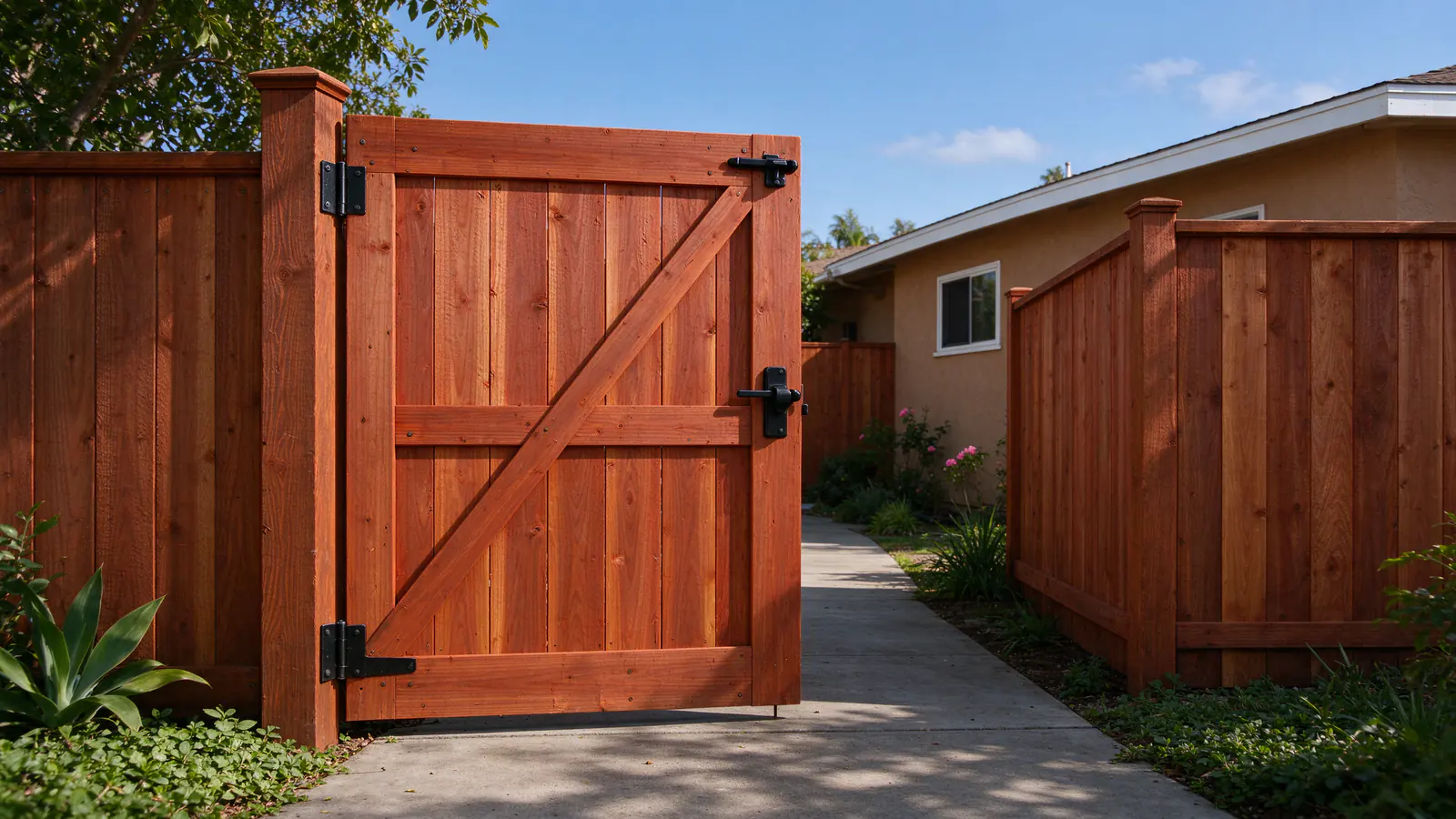
- A diagonal brace from the bottom hinge corner up to the top latch corner, so the weight pushes along the brace instead of pulling the corner down
- A steel frame inside wide wood gates
- An anti-sag cable kit as a stopgap on a gate you already have
Vinyl gates get metal-reinforced frames, and aluminum and steel gates are welded or bolted into a rigid frame.
Hinges, latches and hardware
We size hinges for the gate’s weight and width. Near the harbor and the beach, salt air rusts plain steel fast, so we use stainless or heavily coated hinges, latches and screws. You can choose:
- Gravity latches that catch when the gate closes
- Lockable latches and keyed deadbolts for side gates
- Two-sided latches you can open from either side
- Self-closing, self-latching hardware for pool gates, with the release out of a child’s reach
We set the latch after the gate has hung for a while, so it still lines up once the posts settle. See coastal fence materials for hardware choices near the water.
Want a gate that still latches next year?
Our estimate names the post size, frame, hinges and latch for every gate.
Fixing the gate you have
Most gate repairs we do fall into a few patterns.
It sags or drags
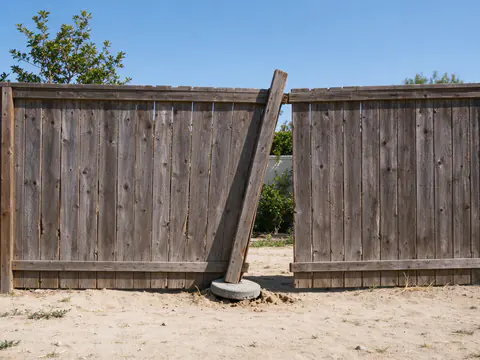
Usually that is an undersized hinge post or a frame with no brace, not loose hinges. Tightening screws buys you a few weeks. We fix it for good with a heavier hinge post in a deeper footing, a brace or a rebuilt frame. The sagging gate guide walks through each fix.
It will not latch
The post has moved, so the latch no longer lines up. We reset the post, or square the gate and move the latch.
It swings open in the wind
Double gates need drop rods and a center stop; a single gate may need a stronger latch or a stop. Santa Ana gusts reach the Oxnard plain and will find any loose gate.
The hardware has rusted
We replace hinges and latches with stainless or coated hardware, screws included.
Gates on a slope
A gate that swings uphill hits the ground partway open. If your yard slopes across the opening, we hang the gate to swing downhill, leave a bigger gap at the low side, or switch you to a rolling gate. Rising hinges, which lift the gate as it opens, help on a gentle slope. We decide on site, because it changes where the posts go.
Side-yard gates for bins and mowers
Your side-yard gate probably sees more traffic than any other: trash and recycling bins twice a week, the mower, the wheelbarrow, bikes. Width matters more than people expect. A gate sized for one person makes every bin day a squeeze, and dragging a bin through it works the latch post loose. We fix that with a wider single gate on a steel frame, or a pair of narrower leaves.
Double gates
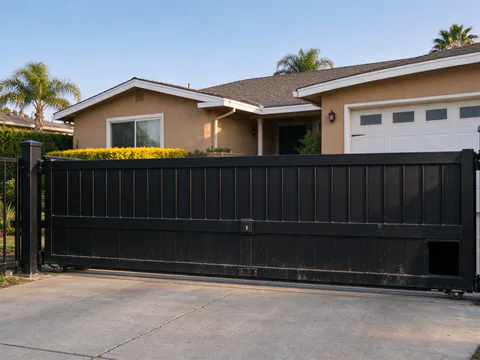
Double gates open wide for a trailer, a boat or equipment. We hang each leaf on its own heavy post, put a drop rod on one leaf to lock it into the ground and add a center stop so the other cannot swing through. Wide wood double gates usually get steel frames to stay square. For vehicle entrances, see driveway gates and swing vs sliding gates.
Pool gates
When a permit is issued for a new or remodeled pool at a single-family home, California requires at least two of seven drowning-prevention features, and a barrier enclosure is one of them. A pool gate closes and latches on its own, swings away from the pool and keeps the release out of a child’s reach. We plan that work alongside your pool permit.
County gate rules
In unincorporated areas such as El Rio, Ventura County puts vehicle gates at least 20 ft back from the front or street-side setback and requires them to be at least 15 ft wide, and a swing gate may not swing into that 20 ft. Walk gates are not covered by that rule. In a city, we check the rule for your address. See the Oxnard fence rules guide.
Matching your fence
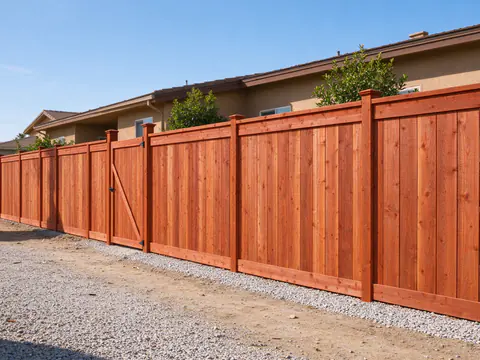
We build your new gate to match the fence it hangs in: the same boards, panels or fabric, the same height and the same finish. If the fence around the gate is failing too, see fence repair or wood fences for a fuller fix.