Near Oxnard’s beaches and harbor, vinyl and powder-coated aluminum hold up best because they do not rust or rot. Wood works with stainless or hot-dip galvanized fasteners. Bare or lightly coated steel needs a maintenance plan. Whatever the fence, the hardware usually fails before the material does.
Live near the beach and wondering what will last in the salt? At Rancho Oxnard Fence we plan fences for lots in Oxnard Shores, Mandalay Bay, Channel Islands Harbor and Port Hueneme, and that’s the first question every owner asks. Here we compare the materials, explain why hardware matters most, and cover the coastal permit question.
Two kinds of corrosion
Salt in the air
On lots facing the beach, the harbor and the channels, salt spray settles on every surface. It draws moisture and eats into bare steel and thin coatings. It fades with distance from the water.
Corrosive soil
Below ground, USDA soil data rates much of central Oxnard and Port Hueneme as highly corrosive to both uncoated steel and concrete. That reaches well inland, so a steel post or a poorly made footing can corrode at the ground line miles from the beach.
Materials compared
| Material | Salt air | Corrosive soil | Upkeep |
|---|---|---|---|
| Vinyl | Does not corrode | Does not corrode | Wash a few times a year |
| Powder-coated aluminum | Does not rust | Does not rust | Rinse salt off; touch up chips |
| Wood (redwood, cedar) | Weathers; fine with good fasteners | Rot risk at grade | Stain every few years |
| Galvanized chain link | Zinc weathers fastest | Posts rust at grade | Replace sooner near the water |
| Vinyl-coated chain link | Coating protects wire | Coated posts resist | Low |
| Tubular steel or iron | Rusts where coating fails | Rusts at the base | Regular coating care |
Vinyl
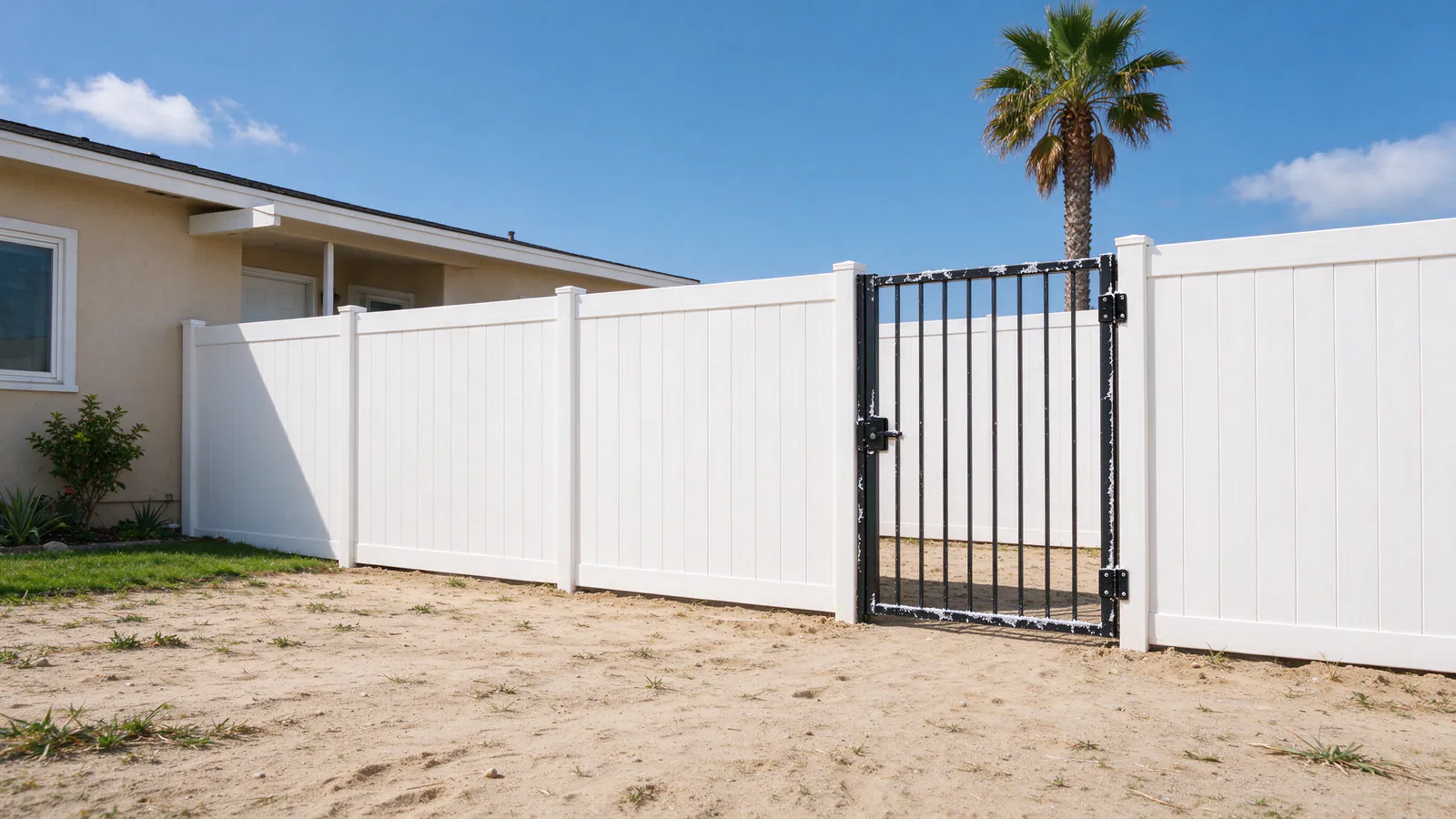
Vinyl does not rust, rot or attract termites, which makes it the easiest choice on damp, salty lots. Its weak points are wind load on solid panels and its metal parts. See vinyl fences and vinyl vs wood.
Aluminum
Powder-coated aluminum does not rust and keeps a view open. A good powder coat protects its color; steel screws in an aluminum system are the parts to replace with stainless. See aluminum fences.
Wood
Redwood and cedar handle salt air reasonably well. The risk is at the ground line and in the fasteners: plain steel nails rust, bleed streaks down the boards and let go. See wood fence care.
Steel and iron
Strong and good-looking, but they rust wherever the coating fails, especially at the base where water and soil sit against the post.
Building near the beach?
The estimate names the material, the coating and the hardware for your exposure.
Hardware fails first
On a coastal fence, the small parts go first:
- Fasteners. Hot-dip galvanized or stainless screws and nails instead of plain steel.
- Hinges and latches. Stainless or heavily coated, sized for the gate.
- Post bases. Concrete crowned to shed water; coated or stainless brackets.
- Inserts and brackets in vinyl and aluminum systems.
Replacing rusted hardware costs more in labor than better hardware costs up front. Ask what the hardware is made of; it is rarely on the brochure.
Care near the water
- Rinse metal fences and hardware with fresh water a few times a year
- Touch up chips in steel coatings before rust spreads under them
- Keep sprinklers off fences, which adds minerals and moisture
- Check gate hinges and latches for rust and tighten them
Footings and sand
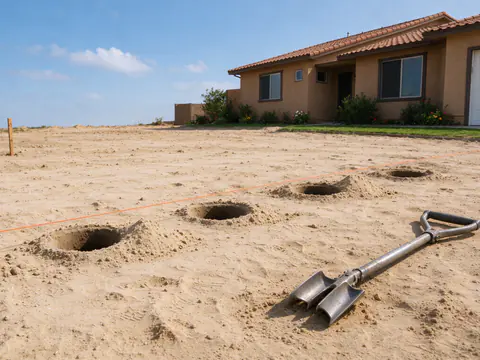
Beach lots also sit on loose sand, often with groundwater close below. That changes the footing more than the material. See fence posts in sandy soil.
The coastal zone
Oxnard’s beach neighborhoods lie inside the California coastal zone. Under the Coastal Act, development includes placing any solid structure on land, so a new fence can need a coastal development permit unless it is exempt. Many improvements to existing homes are exempt, but whether one applies depends on exactly where the lot sits, so we check beach-area fences with the city first. See the Oxnard fence rules guide.
Cost near the coast
Corrosion-resistant hardware and coatings add to the price up front and save repairs later. Our typical ranges are about $35 to $75 per linear foot for 6 ft vinyl privacy and $35 to $100 for ornamental aluminum or steel, installed; your written estimate after the site visit sets the price. See the Oxnard fence cost guide, or call to talk through your lot.