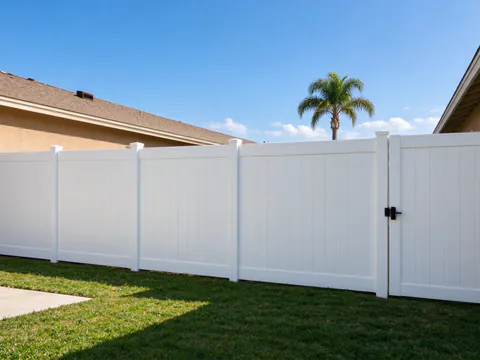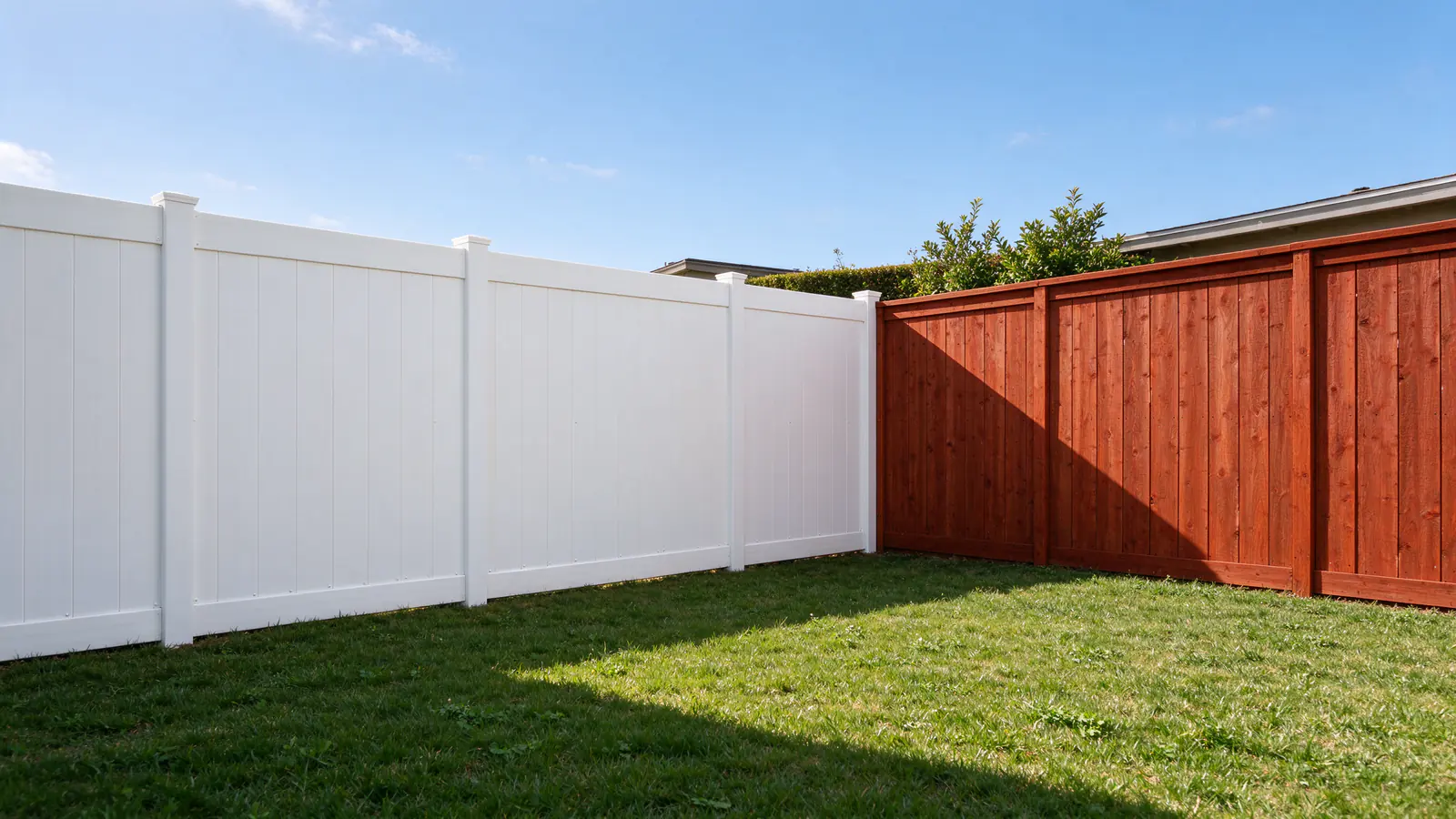
For most Oxnard back yards, vinyl wins on upkeep, termites and salt air, and wood wins on look, flexibility and easy repairs. Vinyl usually costs a little more up front. On damp, sandy lots or near the beach, vinyl or wood on steel posts lasts longest; on windy, exposed lots, either needs posts built for the wind.
Choosing between vinyl and wood? At Rancho Oxnard Fence we build both vinyl and wood fences across Oxnard and west Ventura County, so we have no reason to push either. Here we compare them on what decides how your fence ages here: damp sand, termites, salt air, sun and Santa Ana wind.
Side by side
| Vinyl | Wood (redwood, cedar) | |
|---|---|---|
| Typical 6 ft privacy, installed | $35 to $75 per ft; premium past $100 | $30 to $70 per ft |
| Rot in damp sand | No | At the ground line unless posts are rated or steel |
| Termites | No | Drywood and subterranean risk |
| Salt air | Does not corrode; hardware still matters | Fine with stainless or galvanized fasteners |
| Wind | Solid panels catch more; posts need inserts | Solid panels catch wind; posts sized for it |
| Look | Clean, uniform | Warm, many styles |
| Upkeep | Wash a few times a year | Stain every few years; replace boards |
| Repairs | Panel swap if the system is still made | Board by board, any time |
Those are our typical ranges; your written estimate after the site visit sets the price. See the Oxnard fence cost guide.
Damp sand and rot
Much of central and south Oxnard sits on somewhat poorly drained sand with a winter water table as shallow as about 2.5 ft. Wet sand keeps the base of a wood post damp, which is where wood fences rot. Vinyl does not rot. A wood fence can avoid the problem with ground-contact rated posts or steel posts under wood boards.
Termites
UC IPM notes the western drywood termite is common along the Pacific coast and nests in wood without needing soil contact. Subterranean termites come up from the ground. Vinyl gives neither anything to eat. Wood needs treated or naturally resistant material at ground contact and soil kept off the boards. See wood fence care.
Salt air
Neither material rusts, but both rely on metal parts that do. Vinyl systems use steel or aluminum post inserts and metal hinges; wood fences use nails, screws and hinges. Near the harbor and the beach, specify stainless or hot-dip galvanized hardware either way. See coastal fence materials.
Want both priced on your line?
The estimate can show vinyl and wood side by side for the same run.
Wind
Santa Ana gusts of 50 to 70 mph have been forecast for the Ventura County coastal plain. A solid 6 ft fence of either material catches that wind. Vinyl posts are hollow and rely on concrete and inserts; wood posts rely on their size and footing. On exposed lots, both get heavier posts or closer spacing, or a semi-private design. See Santa Ana winds and fences.
Sun and color
Vinyl expands in the heat, so rails are cut with room to move; white and light colors move least and fade least. UV rating on the spec sheet matters more than the brochure. Wood grays in the sun unless it is stained; a penetrating stain every few years slows weathering.
Repairs
Wood is the easier fence to repair: a broken board or rail can be replaced any time, and a new board weathers in. Vinyl panels can be swapped only if the same system is still made, so keep the brand and color on file.
Installation differences
The build sequence is the same for both: line, utility marks, footings, then panels, with gates hung last. The differences are in the details. Vinyl rails are cut with room to expand and the fence sits slightly above grade. Wood boards are fastened with stainless or galvanized fasteners and kept off the soil. Both need footings sized for loose sand in central and south Oxnard, and in wet months both have their holes poured the day they are dug.
Which to choose
- Damp side yard or sprinkler-soaked run: vinyl, or wood on steel posts
- Near the beach: vinyl or aluminum, with stainless hardware
- Shared fence where both sides should match: board-on-board wood or double-sided vinyl
- Dog that chews or digs: either, with a dig-resistant base; see the best fence for dogs
- Lowest upkeep: vinyl
- Warmest look or a custom style: wood
Call to talk it through for your yard, or see privacy fences.