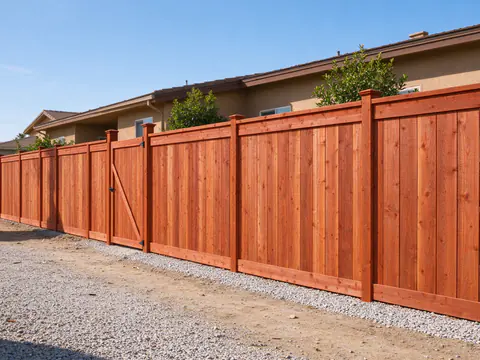
How long a wood fence lasts near Oxnard depends far more on its posts and how it is cared for than on the board species. Damp sand, sprinkler spray and termites attack the ground line first. Ground-contact rated or steel posts, corrosion-resistant fasteners and keeping water and soil off the boards add the most years.
Want your wood fence to last? At Rancho Oxnard Fence we build and repair wood fences across Oxnard and west Ventura County. Here’s what shortens a wood fence’s life on the coastal plain and the care that keeps your redwood or cedar sound.
What shortens a wood fence’s life
Damp ground
Much of central and south Oxnard sits on somewhat poorly drained sand with groundwater as shallow as about 2.5 ft in winter. The base of a wood post stays damp, and that is where decay starts.
Termites
UC IPM notes that the western drywood termite is common along the Pacific coast. Drywood termites nest inside the wood and do not need contact with soil, so rails and boards are at risk, not only posts. Subterranean termites come up from the ground; UC guidance is that wood in contact with soil should be chemically treated or naturally resistant, and it lists untreated fence posts near a structure among items that can contribute to infestation.
Sprinklers
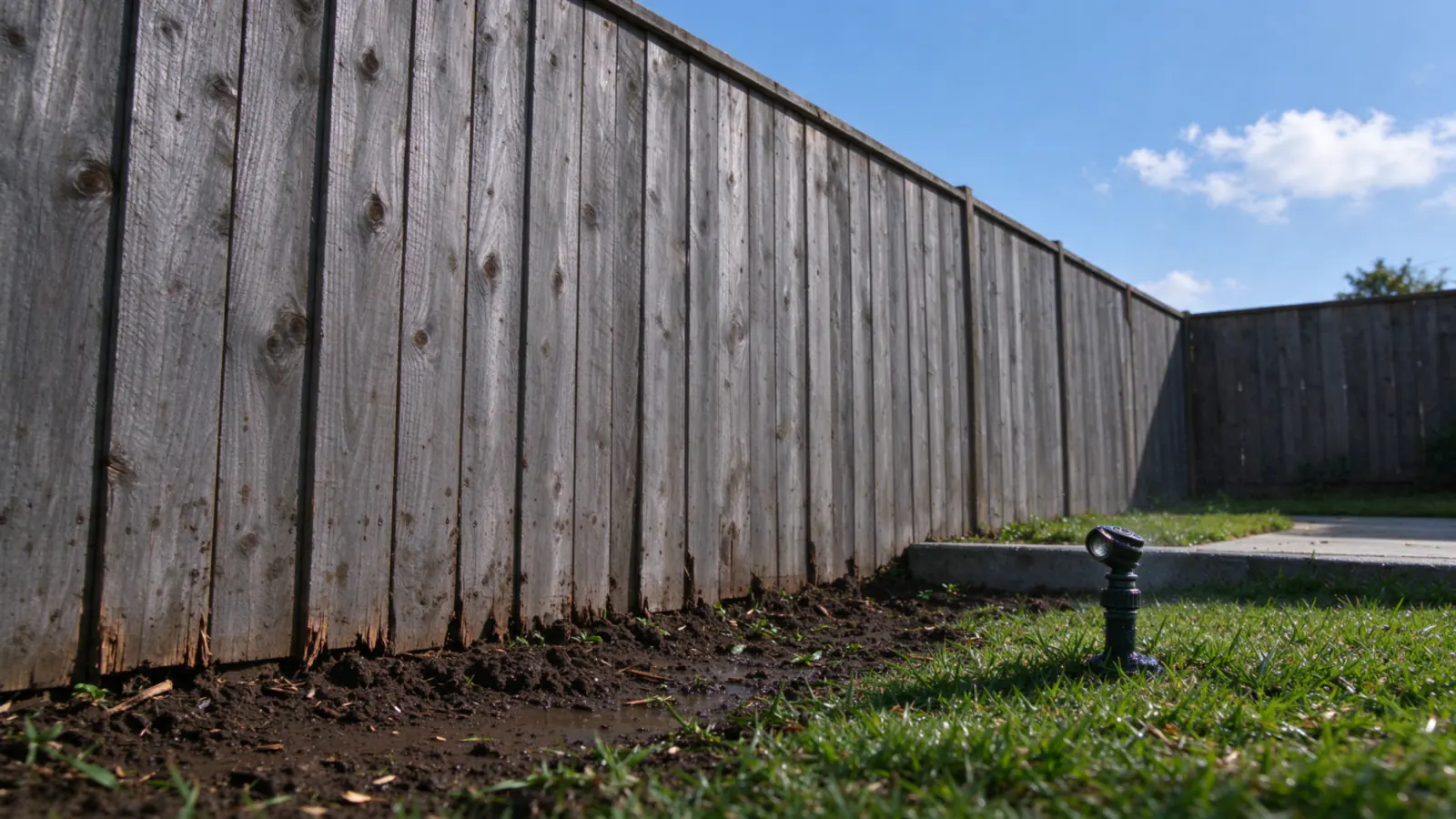
Lawn and bed sprinklers that hit the fence every day keep the bottom boards and the post bases wet. Over years, that does more harm than rain.
Rusting fasteners
Near the coast, plain steel nails and screws rust, bleed dark streaks down the boards and loosen. Boards that work loose split and let water in.
Sun
UV turns wood gray and dries the surface. Graying is cosmetic; deep checking and splitting let water in.
The care that adds years
| Task | Why | How often |
|---|---|---|
| Turn sprinklers away from the fence | Keeps the base dry | Once, then check each season |
| Keep soil, mulch and firewood off the boards | Cuts rot and termite access | Ongoing |
| Penetrating stain | Slows weathering | Every few years |
| Check posts at ground level | Catches rot early | Before wind season |
| Replace rusted fasteners | Keeps boards tight | As found |
| Look for termite signs near the house | Catches infestation early | Yearly |
Wood fence showing its age?
A repair visit checks posts at ground level and says whether to repair or rebuild.
A yearly check, before wind season
Walk the fence once a year, ideally before fall. Push each post at the top; a sound post barely moves. Probe the wood at the ground line with a screwdriver; soft wood that gives easily is decay. Look along the bottom boards for soil, mulch or sprinkler spray touching them. Check for loose or rusted fasteners, split boards, and small piles of pellets or sawdust that can signal termites. Open and close each gate. Ten minutes catches most problems while they are still repairs.
Staining well
Stain only dry wood; new boards often need time to dry before a penetrating stain will soak in. Clean off dirt, salt and mildew first, then apply to both faces where you can reach them, paying attention to the bottom edge and the board tops, where water sits longest. Penetrating stains soak in and wear away gradually; film-forming paints can peel and trap water behind them, which is harder on a fence in damp ground.
Building it to last from the start
The longest-lived wood fences here are built with:
- Ground-contact rated posts, or steel posts with wood rails and boards
- Footings crowned so water runs away from the post
- Hot-dip galvanized or stainless fasteners
- A small gap between the bottom of the boards and the soil
- Cap rails on styles that use them, to shed water off board tops
See fence posts in sandy soil and coastal fence materials.
Redwood or cedar
Both resist decay better than pine or fir. Redwood usually costs more and holds its color longer; cedar is lighter and a little cheaper. Board grade matters as much as species: heartwood resists decay better than sapwood. Neither species saves a fence whose posts rot first.
Signs it is time to repair or replace
- Posts soft when probed at the ground line
- The fence leans more after each storm
- Boards split, cupped or loose along the run
- Termite frass or galleries in rails or boards
Local damage is a repair; soft posts along the whole run usually mean replacement. See fence repair and fence replacement. For wind damage, read Santa Ana winds and fences. If upkeep is the deciding factor, compare vinyl vs wood, or call to talk it through.