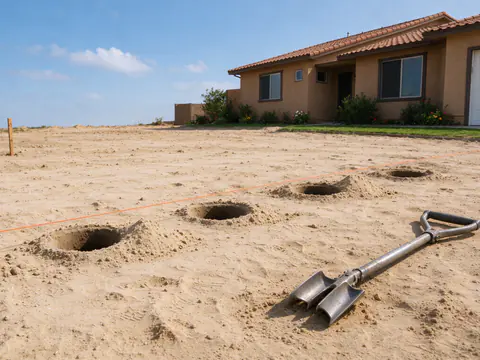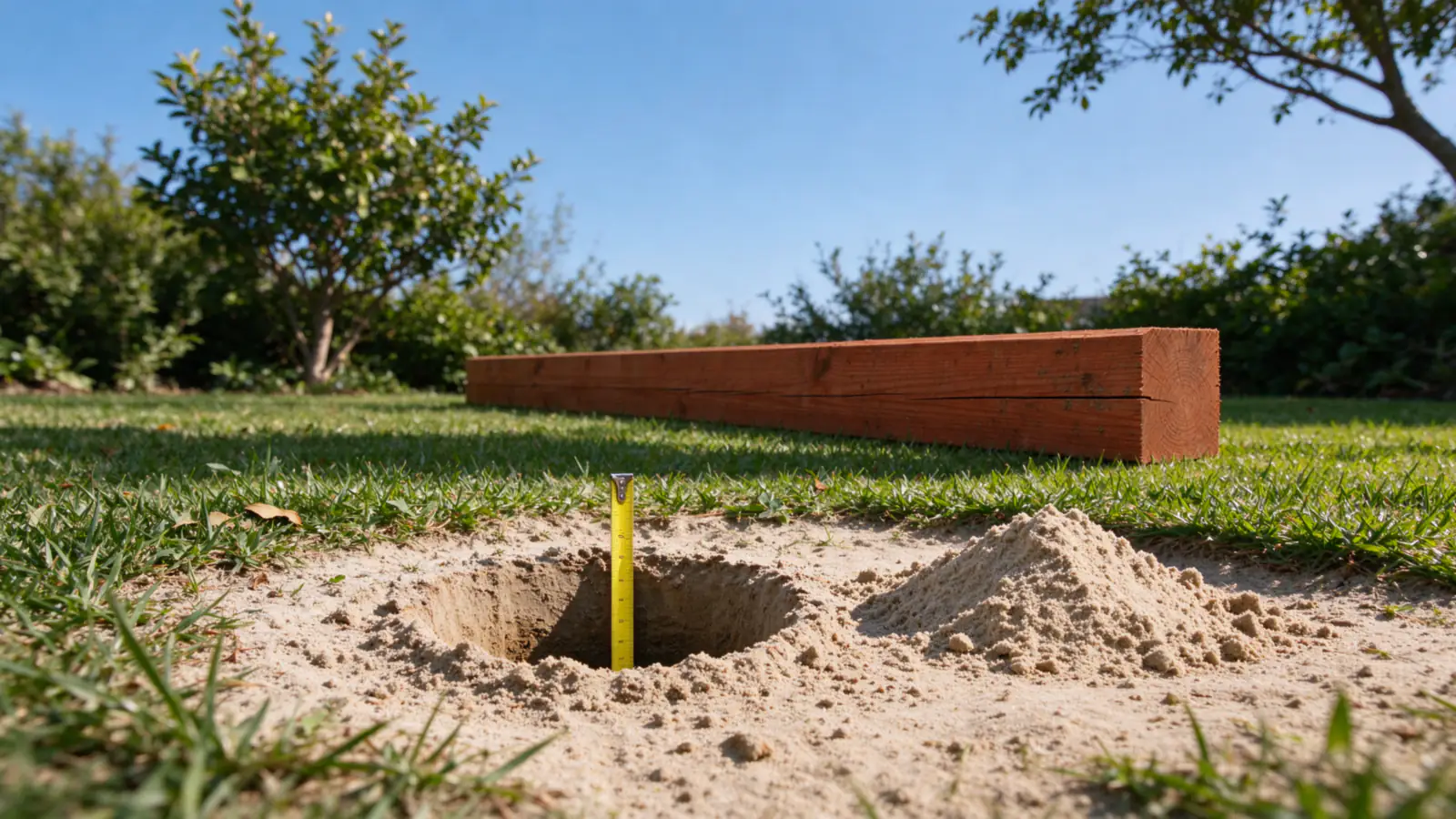
There is no single depth that fits every post in sand. In loose sand with a high water table, a footing must be wider or deeper than in firm soil, and gate and end posts need the largest. Depth is set at the site from the fence height, the wind exposure and how close the groundwater sits.
Is your fence leaning? Most fences that lean around Oxnard fail below grade, and at Rancho Oxnard Fence we set posts for this sand on every job. Here’s why sand behaves differently, what a footing has to do, and how Oxnard’s winter groundwater changes the job. For the full service, see fence installation in Oxnard.
What the ground is like
USDA soil data maps much of central and south Oxnard as Hueneme loamy fine sand and Hueneme sandy loam, on nearly flat ground, rated somewhat poorly drained. At sample points in central Oxnard and Port Hueneme, the minimum annual water table sits at about 78 cm. Near the beaches, the map unit is simply coastal beach sand.
Better-drained ground starts a few miles inland. A sample in El Rio shows Pico sandy loam, well drained. Camarillo samples show Zamora loam, also well drained. The same fence can need a different footing in each place.
Why posts lean in sand
A post resists wind by pushing against the soil around its footing. Firm soil pushes back hard; loose sand pushes back less and can shift. Three things make it worse here:
- Water. Wet sand is weaker still, and winter storms bring rain and wind together.
- Solid fences. A solid 6 ft fence catches far more wind than a see-through one.
- Gates. A gate pulls sideways on its hinge post every time it swings.
When a footing is too small for those loads, it rocks a little with each gust and does not settle back. Over a few storms the fence leans.
What a good footing does in sand
It is bigger
Wider footings spread the load over more sand. Deeper footings reach firmer ground and more of it. Which one depends on the post, the fence and how close the water table is.
It bears on undisturbed ground
The hole is shaped so concrete sits against sand that has not been loosened by digging. Some footings flare at the bottom to resist lifting.
It sheds water
The top of the concrete is crowned so water runs away from a wood post rather than pooling against it, which slows rot at the ground line.
Load sets the size
| Post | Load | Footing |
|---|---|---|
| Line post, see-through fence | Lowest | Standard for the soil |
| Line post, solid privacy fence | Wind on a solid face | Larger |
| End and corner posts | Tension and wind from two sides | Larger again |
| Gate hinge post | Gate weight pulling sideways | Largest |
Want the footing plan for your line?
A site visit sets depth and width for the ground, the fence and the wind at your address.
Winter groundwater
About 85% of Oxnard’s yearly rain falls between November and March, according to NOAA’s normals for the airport. In those months, a hole in central or south Oxnard can reach wet sand and start taking on water before the concrete goes in. Pouring concrete into standing water weakens it.
The practical answer is timing. Holes are dug and poured the same day in wet months, and any water that collects is dealt with before pouring. Work can still go ahead in winter; it just takes more care. See how long installation takes.
Frost is not the issue
Inland guides talk about digging below the frost line. In Oxnard, the airport averages 0.3 nights a year at or below freezing, so frost heave is not a design factor. Footing size here is driven by sand, water and wind.
Corrosive soil and post materials
The same USDA data rates much of central Oxnard as highly corrosive to uncoated steel and to concrete. That affects post choice:
- Wood posts should be ground-contact rated, with concrete crowned to shed water.
- Steel posts need a coating suited to corrosive soil.
- Vinyl posts do not corrode but rely on their inserts and concrete for strength.
Before you dig
California law requires notice to DigAlert at least two working days, and no more than 14 calendar days, before excavation. That applies to one post as much as a full fence. Sprinkler lines, which are not marked, are worth finding first too.
Signs your posts are failing
- The fence leans more after each storm
- Posts move when pushed at the top
- A gap opens in the soil around a post
- Gates drag or no longer latch
Those are footing problems, not board problems. See fence repair and how to fix a sagging gate. For wind-specific advice, read Santa Ana winds and fences. If your fence needs new posts, the cost guide explains what footings add.