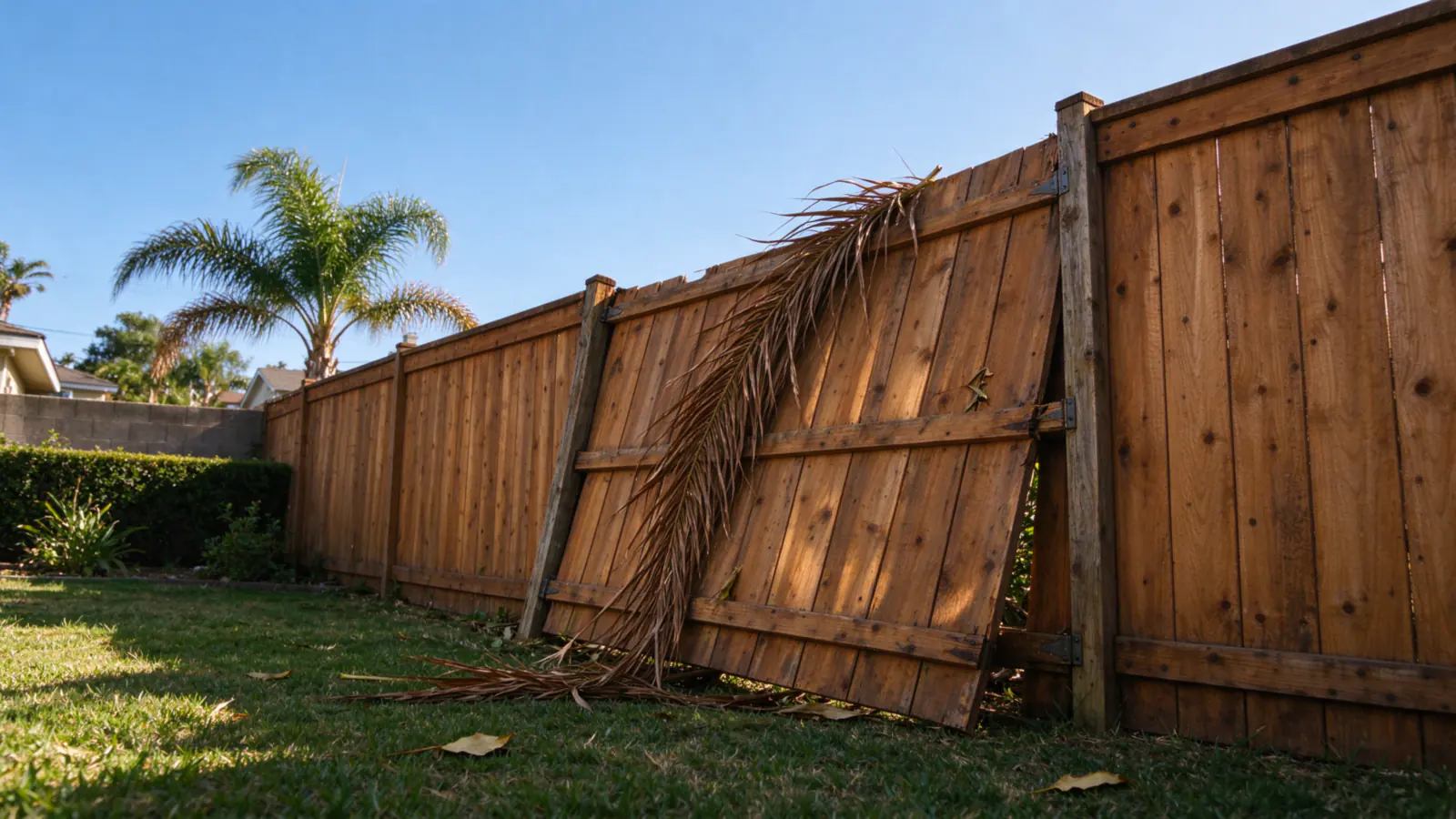
There is no single wind rating for a backyard fence. A solid 6 ft fence on an exposed lot takes the full force of a gust, and in Oxnard Santa Ana gusts of 50 to 70 mph have been forecast all the way to the beaches. Whether it stands depends on post size, spacing, footing and how solid it is.
Worried your fence won’t survive the next Santa Ana? Wind is the most common reason a fence comes down here, and at Rancho Oxnard Fence we build and repair fences for it. Here’s how wind loads a fence, where fences fail, and the choices that keep yours standing.
Santa Ana winds on the coast
Santa Ana winds blow from the northeast, down from the mountains toward the ocean, mostly in fall and winter. In November 2024, the National Weather Service warned of damaging northeast gusts of 50 to 70 mph across the Malibu coast and the Ventura County coastal plain, with the warning area reaching the beaches at Oxnard.
Because those gusts come from the opposite direction to the usual onshore breeze, a fence that has leaned slightly with the sea breeze for years can be pushed the other way.
How wind loads a fence
Solid fences act like sails
Wind pressure grows with the area it hits. A solid 6 ft privacy fence presents its whole face; a chain link or open picket fence presents very little. That is why solid wood and vinyl fences come down in storms that see-through fences survive.
The load goes to the posts
Boards and panels transfer the wind to the rails, the rails to the posts, and the posts to the footings. The post at ground level carries the most bending, which is exactly where wood rots and steel rusts.
Gusts rock footings
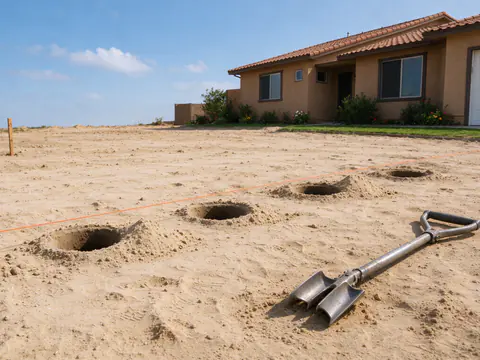
Each gust pushes the footing a little. In firm soil it settles back. In loose sand, a footing too small for the load can rock and not return. See fence posts in sandy soil.
Where fences fail
| Failure | What you see | Usual cause |
|---|---|---|
| Snapped at grade | Post broken at the ground line | Rot or rust plus wind load |
| Rocking footing | Post sound but leaning, gap in the soil | Footing too small for sand |
| Panels off the rails | Boards or panels blown out | Fasteners rusted or undersized |
| Whole run leaning | Several posts tilted the same way | Footings and spacing not built for exposure |
Exposed lot, solid fence?
The estimate sizes posts, spacing and footings for the wind before choosing boards.
Designing for wind
Posts and spacing
Heavier posts and closer spacing spread the load. On the most exposed runs, those two changes matter more than the board material.
Footings
Wider or deeper footings in sand, shaped to bear on undisturbed ground. Gate and end posts get the largest.
Let some wind through
Spaced boards, shadow-box styles, lattice tops or a see-through fence reduce the load. Many owners keep full privacy only where they need it.
Reinforce vinyl
Vinyl posts are hollow. Steel or aluminum inserts at gates, corners, ends and along exposed runs stiffen them. See vinyl vs wood.
Protect the ground line
Ground-contact rated wood or coated steel posts, concrete crowned to shed water, and corrosion-resistant hardware keep the weakest point from weakening further. See coastal fence materials.
Which lots are most exposed
Exposure matters as much as the fence. Corner lots, lots backing onto open fields or wide streets, and fences running across the line of a northeast gust take the most load. A fence sheltered by buildings and trees on its windward side takes far less. Two fences of the same design on the same street can fare very differently, which is why exposure is judged on site rather than assumed.
Gates in the wind
A loose gate in a gust swings hard and pulls its hinge post. Double gates need drop rods and a center stop; single gates need a solid latch and a stop. See how to fix a sagging gate and gate installation.
Before the season
- Check posts at ground level for rot, rust or movement
- Tighten or replace loose boards and rusted fasteners
- Make sure gates latch and drop rods seat
- Trim branches that could fall on the fence
After a storm
Photograph the damage at the posts before cleanup, then secure any opening. See fence wind damage and insurance and emergency fence repair, or call to have the run looked at.