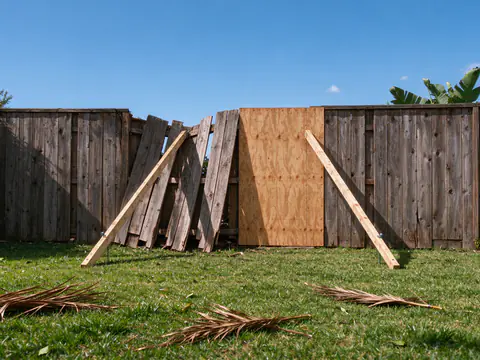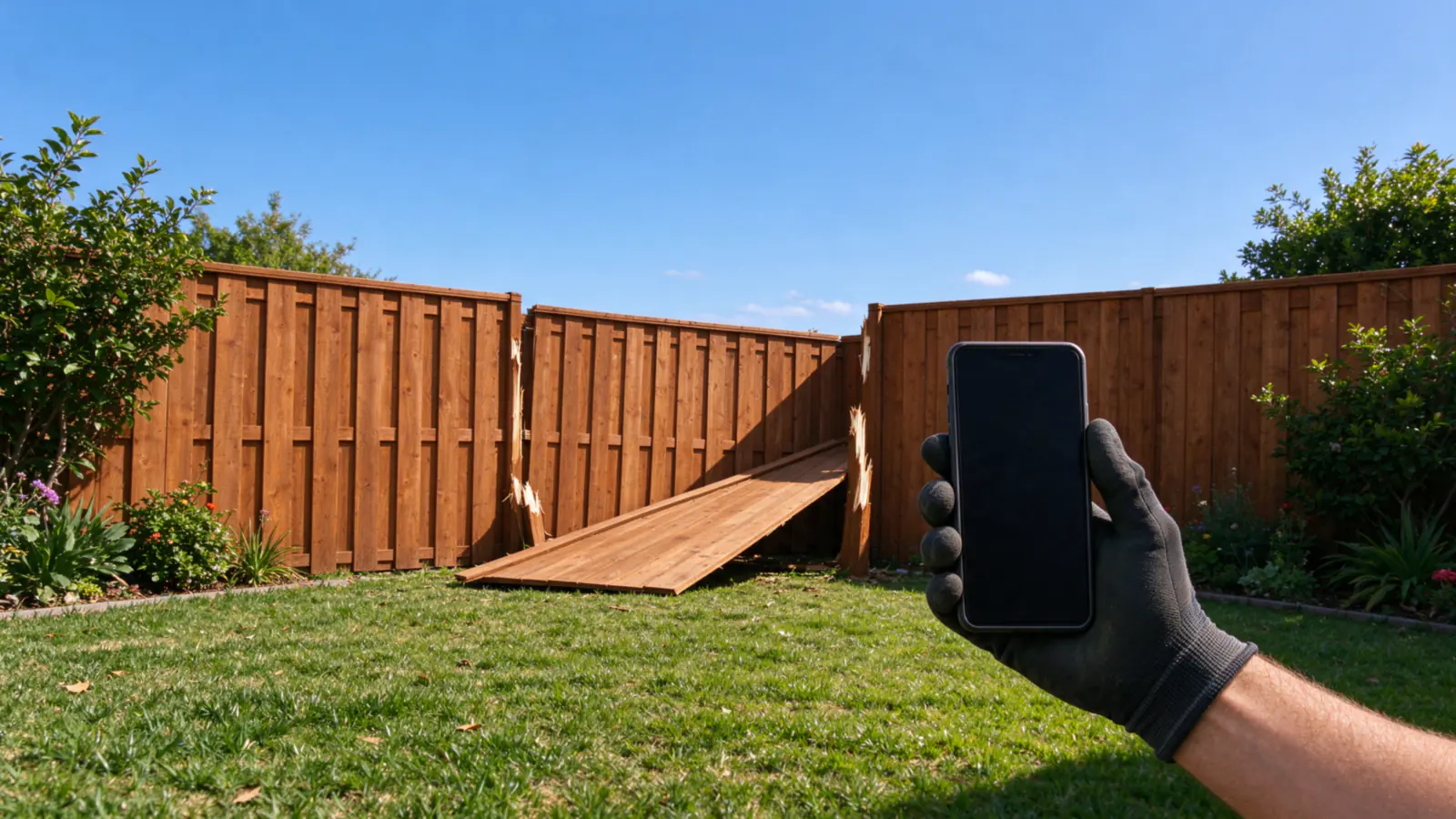
It depends on your policy. Many homeowners policies treat a fence as a detached structure, so the place to start is that section of your policy and its deductible. Whatever the coverage, photograph the damage before cleanup, keep receipts for any temporary fix, and get an itemized repair estimate.
Fence down after a storm and wondering about insurance? At Rancho Oxnard Fence we repair wind-damaged fences across Oxnard and west Ventura County, and this question comes up after big storms. Here’s what to check, what to record and how shared fences fit in. It’s general information, not insurance or legal advice; your policy and your insurer have the final word.
Why fences fail in Oxnard storms
Santa Ana winds reach the coast here. The National Weather Service has warned of damaging 50 to 70 mph northeast gusts across the Ventura County coastal plain, all the way to the beaches at Oxnard. Solid fences catch that wind, and loose sand gives posts less grip. Most wind damage shows at the base of the posts. See Santa Ana winds and fences.
Check your policy
- Which section covers fences. Often the part covering detached or other structures, with its own limit.
- The deductible. For a short section of fence, the repair may cost less than the deductible.
- Covered causes. Whether wind is a covered cause, and any exclusions such as wear, rot or poor maintenance.
- How claims are inspected. Whether the insurer wants to see the damage before repairs.
If the damage is close to the deductible, an itemized estimate helps you decide whether to claim.
Document before cleanup
- Photos of every damaged post at ground level, close and from a distance
- The whole run, from both ends
- Any damage the fence caused to cars, buildings or a neighbor’s property
- The fence’s age, material and height
- What failed: posts snapped, footings rocking, panels blown out
- Receipts for any temporary fix
Why the cause matters
Insurers often distinguish sudden damage from wear. A post snapped at a rotted base may be treated differently from a sound post pushed over with its footing. Photos at ground level show which happened. See fence posts in sandy soil.
Need an itemized estimate for a claim?
The estimate separates the temporary fix, the repair and any upgrades.
Getting estimates that help a claim
An estimate useful to an insurer lists what failed and what will be replaced, part by part: posts and footings, rails, boards or panels, gates and hardware, removal of debris. It keeps the temporary fix on its own line and any upgrades on theirs. It notes the existing material and height so like-for-like is clear. Two estimates written that way are easy to compare, and easy for an adjuster to read.
Repairs to prevent the next loss
If the same fence keeps coming down, the repair is the moment to fix the cause: heavier posts at exposed points, larger footings in sand, closer spacing, or spaced boards that let wind through. Insurers generally treat those as upgrades, so they appear as separate lines, but they can stop the next claim. See fence repair for how repairs are scoped.
Shared fences
When a boundary fence blows down, the repair is usually a shared cost under California Civil Code 841, with 30 days’ written notice before the permanent work. Whose insurance applies, or whether the owners split it, is something each owner should check with their insurer. Securing the opening first and documenting the damage keeps the conversation simple. See the good neighbor fence law guide.
Temporary fix, then repair
The first visit closes the opening; the permanent repair follows once the wind drops. The two are priced on separate lines, which is what insurers usually want to see. See emergency fence repair.
Repair or replace
If only one or two posts failed, a repair is usually right. If posts are soft along the run, replacement is often better value, and a policy may only cover the damaged section. See how to fix a sagging gate for gate damage, and the Oxnard fence cost guide for ranges. Call if you want the damage looked at.