Want a new fence that stays straight? Rancho Oxnard Fence installs wood, vinyl, chain link and aluminum fences across Oxnard, with walk and driveway gates to match. Before we talk material, we answer two questions that matter more here: where your fence can legally go, and what the ground under it will hold.
Central and south Oxnard sit on loose, sandy soil with groundwater close to the surface in winter. The coast brings salt air, and the fall Santa Anas push hard on solid fences. A fence built the way you would build it on firm inland soil can lean within a few seasons here, so we build for these conditions from the first post.
What we do on the first visit
We walk your property and set the plan. We look at five things:
- Your line. We find your corners from survey markers or points you and your neighbor agree on, not from the old fence. If the boundary is in doubt, a licensed surveyor sets it first. Read more in fences, surveys and property lines.
- Your rule. Inside the City of Oxnard, the permit question is simple for most fences, and the height depends on where the fence sits on your lot. County areas such as El Rio follow Ventura County’s rules. Our Oxnard fence rules guide explains both.
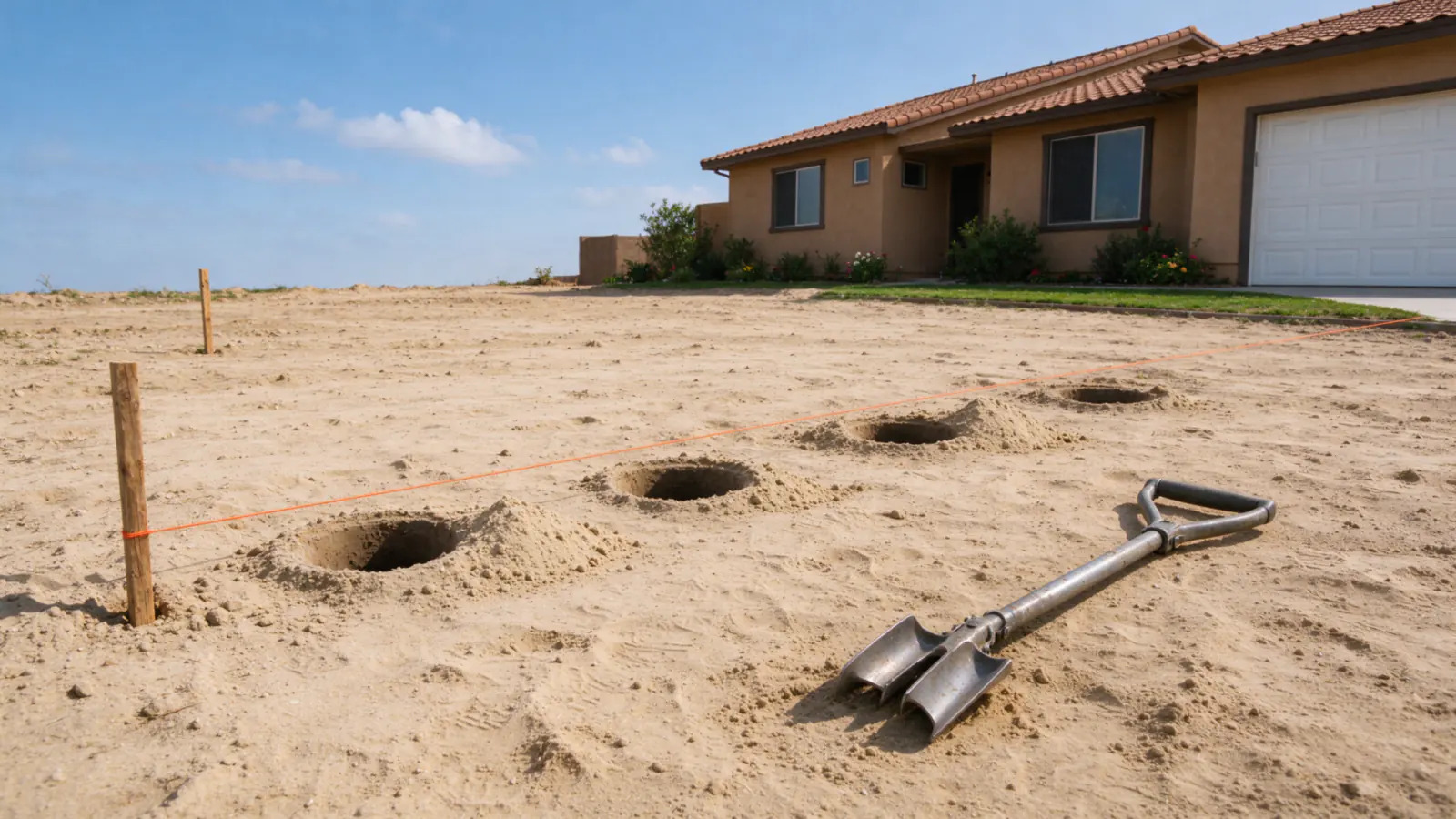
- Your ground. Sand, slope, roots, sprinkler lines and old concrete along the run all change how we set the footings.
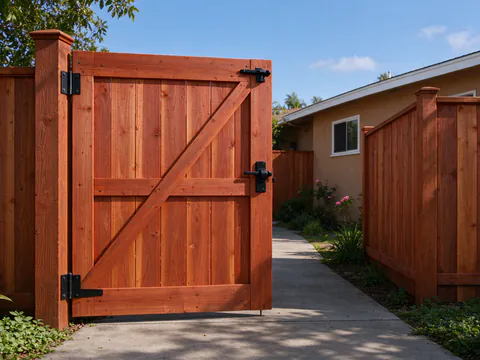
- Your gates. We measure each opening for width, swing or slide, and the post it needs.
- Access. How we get materials to the line, and where the old fence goes.
You get a written estimate that names the material, the height, each gate, how we will set the footings and whether removal is included.
Will my posts hold in the sand?
They will if the footings are right, and most fence failures here start below the ground. USDA soil maps show much of central and south Oxnard as loose, poorly drained sand, with the winter water table as shallow as about 2.5 ft.
That changes your fence in three ways.
Sand holds a post loosely
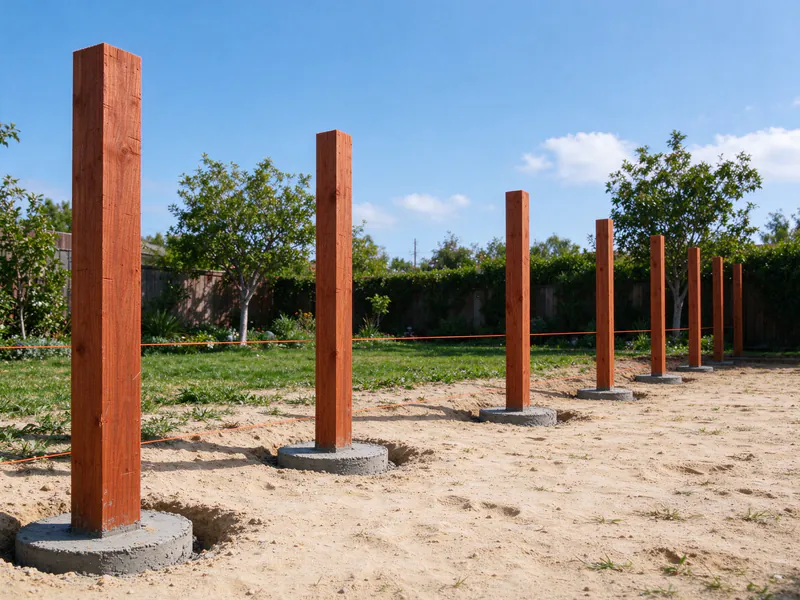
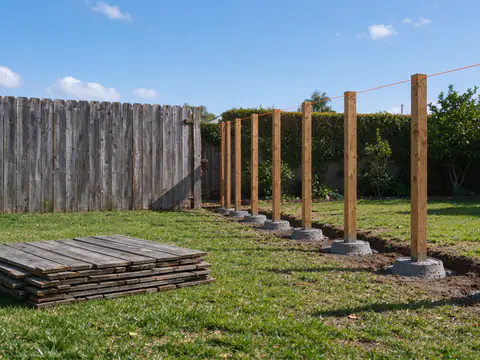
In sand, a post depends on the size of its footing more than on grip. We make footings wider or deeper than we would in firm soil and shape the hole so the concrete bears on undisturbed ground. Hinge posts get the biggest footings, because a gate pulls sideways every time it swings.
Holes can fill with water in winter
Most of Oxnard’s yearly rain falls between November and March, and a hole that reaches wet sand can take on water before the concrete goes in. On winter jobs we dig and pour each hole the same day and deal with standing water before we pour, never pour into it.
Firmer ground a few miles away
El Rio and much of Camarillo sit on better-drained ground, so we may set the same fence differently a few miles apart. That is why we decide depth on your property, not from a chart. The sandy soil guide has the details.
Wind, salt air and the parts that fail first
Will it stand up to the Santa Anas?
Santa Ana gusts reach right to the beaches at Oxnard; the National Weather Service has warned of 50 to 70 mph from the northeast across the coastal plain. A solid 6 ft fence acts like a sail. On an open lot, we pick post size, spacing and footing depth for the wind before we pick the boards. Spaced boards, a lattice top or a see-through style let the wind pass. See how Santa Ana winds affect fences.
Salt and corrosive soil
Much of central Oxnard’s soil eats bare steel and concrete, and near the harbor and the beach, screws, hinges and post bases usually fail before the fence. We use hot-dip galvanized or stainless fasteners, and we steer you toward powder-coated aluminum or vinyl near the water. Bare steel will need upkeep. Our coastal fence materials guide compares the options.
Want the footing plan for your line?
We walk your property and set the depth, post size and gate posts for your ground.
Which material should you pick?
Pick the material for the job you need the fence to do.
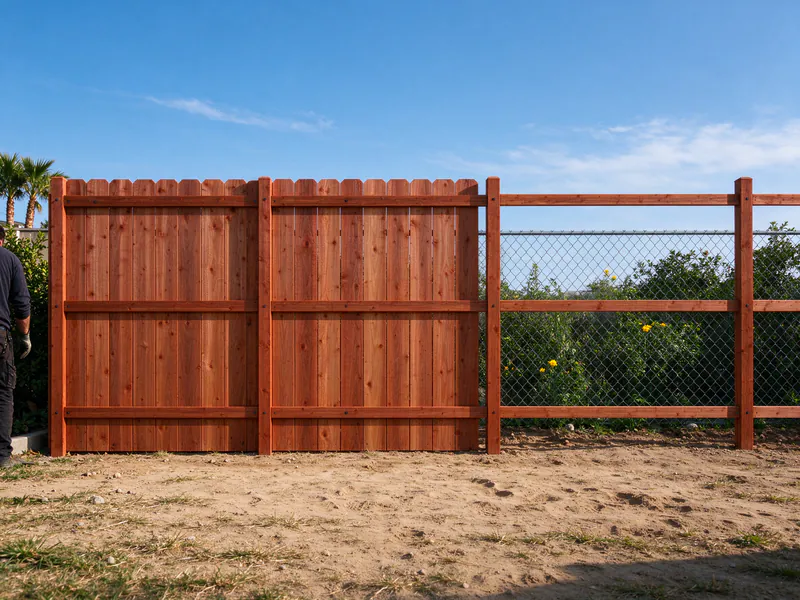
- Wood gives you privacy and is the easiest to repair a board at a time. On a damp lot we use ground-contact rated posts, or steel posts with wood boards. See wood fences.
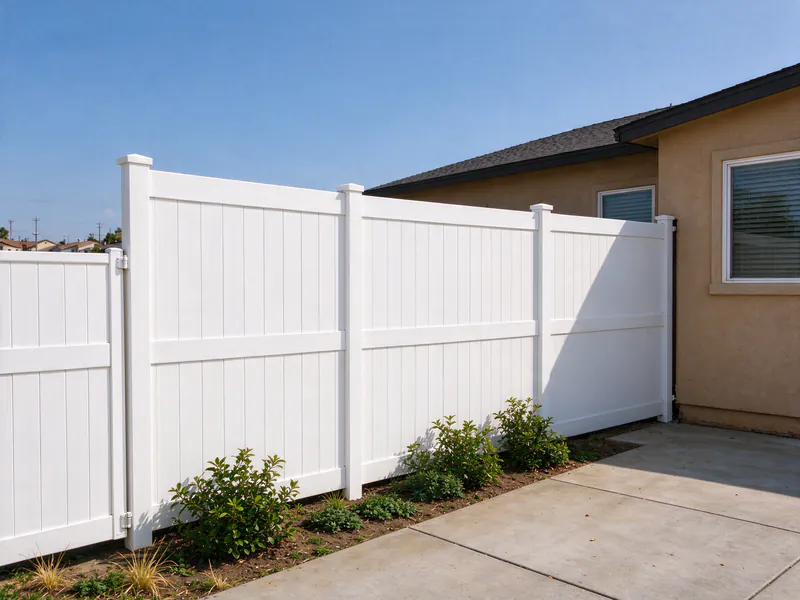
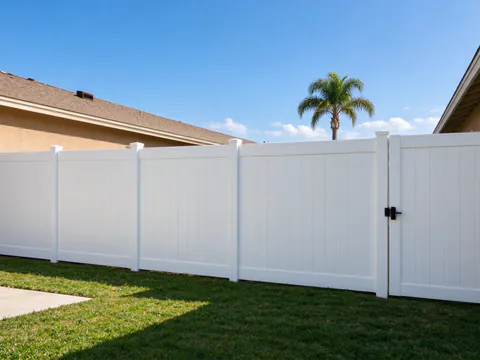
- Vinyl never rots or rusts and needs little upkeep, but solid panels catch wind, so we stiffen posts with steel or aluminum inserts at gates and corners. See vinyl fences.
- Chain link is your budget choice for long runs and dog runs; vinyl-coated fabric outlasts plain galvanized near the coast.
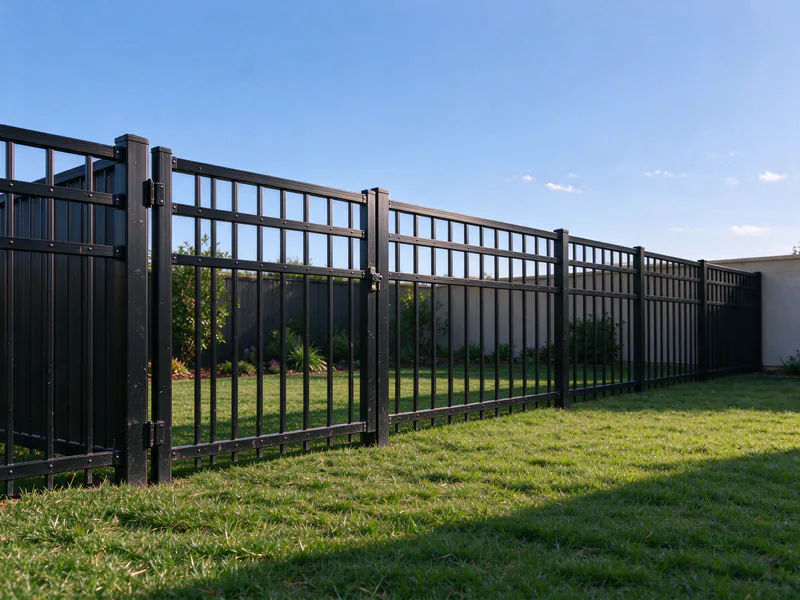
- Aluminum keeps a front-yard view open and never rusts.
For a side-by-side on the two most common choices, read vinyl vs wood.
How we build it
Once your line is confirmed and utilities are marked, we work in a fixed order:
- We remove the old fence, if there is one, with its concrete.
- We string the line and mark posts, gate openings first.
- We dig the holes and pour footings for your ground and the wind.
- We set rails and panels on straight, plumb posts.
- We hang gates last and set the latches once each gate has settled.
- We walk it with you, clean up and haul everything away.
Most back-yard fences take us one to three days on site once materials and any permit are in hand. The installation timeline guide explains what can stretch that. For our typical prices, see the Oxnard fence cost guide.
Sharing the fence with a neighbor?
A new fence on the line is usually a shared fence. California Civil Code 841 presumes you both benefit and share reasonable costs, after 30 days’ written notice. Agree on style, height and the finished side in writing and most disagreements never start. Or we can build a few inches inside your line and skip the question, at the cost of a strip of yard. The good neighbor fence law guide walks you through the notice.