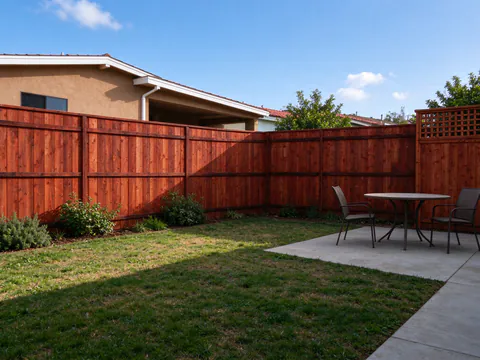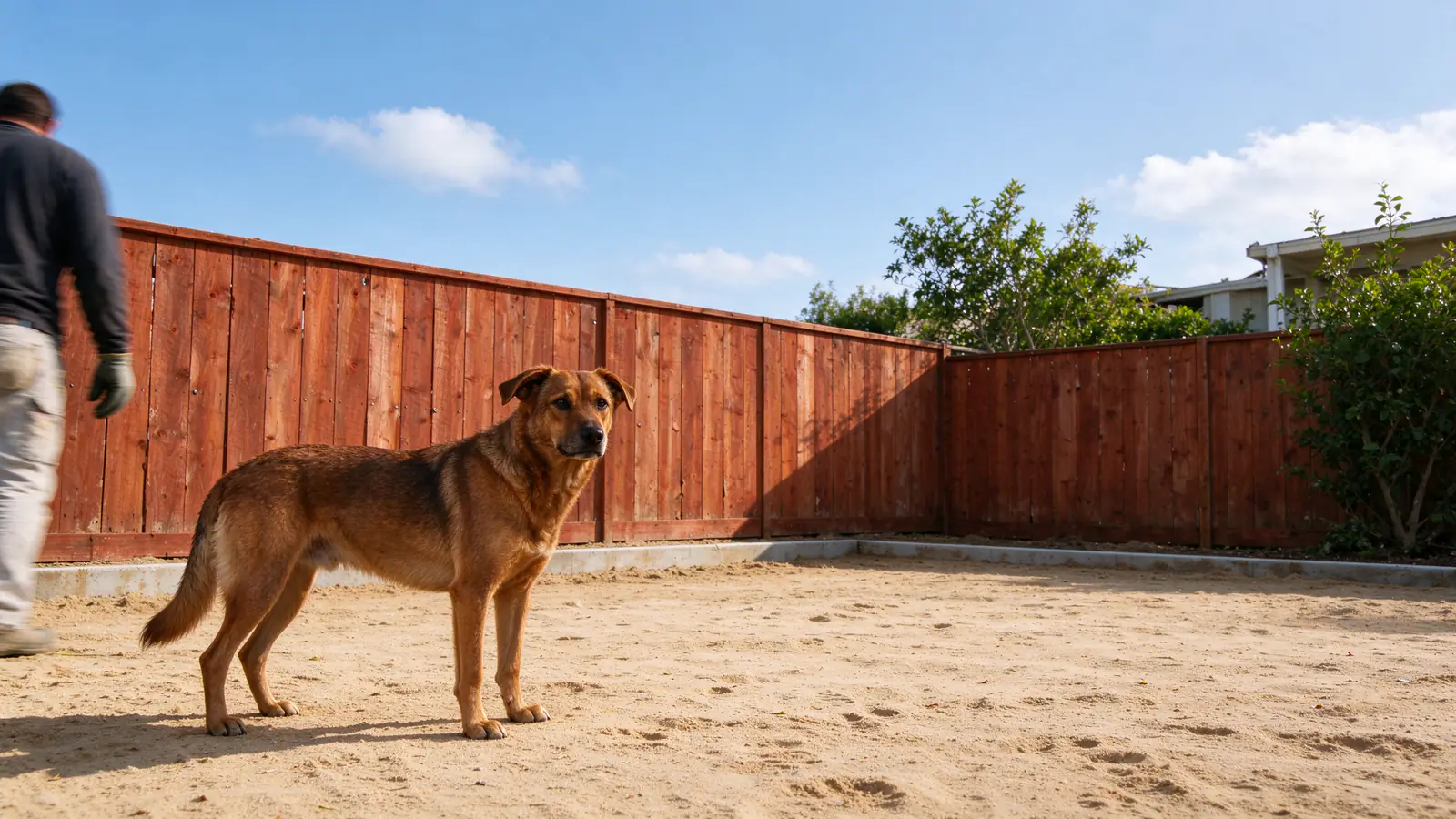
The best dog fence depends on how the dog escapes. In Oxnard’s sandy yards, most escapes are under the fence, so a buried wire apron or concrete mow strip matters as much as height. Then match height to the jumper, keep gaps small for small dogs, and use self-closing gates with latches the dog cannot open.
Is your dog getting out? At Rancho Oxnard Fence we build dog fences and dog runs across Oxnard and west Ventura County, in wood, vinyl, chain link and aluminum. Here are the four ways dogs get out and the fence features we use to stop each one.
The four escapes
Under: digging
Much of central and south Oxnard sits on Hueneme loamy fine sand. It is easy to dig, and a dog that finds a soft spot at the base will tunnel under a fence of any height. Fixes:
- A buried wire apron along the base, angled into the yard
- A concrete mow strip under the fence line
- A bottom rail or bottom tension wire set close to the ground
Over: jumping and climbing
Most dogs are kept in by 5 to 6 ft. Athletic jumpers may need more height, an inward-angled top, or a smooth face with no horizontal rails on the dog’s side to climb. Chain link and horizontal-slat fences give climbers footholds.
Through: gaps
Small dogs squeeze through picket spacing, gaps under gates and spaces at the end of a run. Keep picket gaps tight, close the space under gates, and finish the fence tight to walls and the house.
Out the gate
Most escapes are at gates left ajar. Self-closing hinges, latches that catch on their own, and latches mounted high or on the outside keep gates shut. See how to fix a sagging gate; a gate that sags will not latch.
Materials for dog fences
| Material | Dog strengths | Watch for |
|---|---|---|
| Wood privacy | Solid; blocks view of the street | Chewing; rails as climbing steps on one side |
| Vinyl privacy | Smooth, solid; no chewing damage | Bottom gap; needs dig barrier |
| Chain link | Strong, cheap, dog can see out | Climbable; needs bottom wire and apron |
| Aluminum picket | Open, good-looking | Picket gaps for small dogs; climbable crossbars |
See vinyl vs wood for those two in more depth.
Building a fence for a dog?
Say what the dog does: digs, jumps, squeezes or slips out. The estimate is built around it.
Solid or see-through
A solid fence blocks the view of the street, passing dogs and people, which calms many dogs that bark at what they see. Some dogs are more anxious when they cannot see out, and do better behind chain link or pickets. If your dog fence-fights with a neighbor’s dog, a solid fence on that side often helps.
Where the run goes
Front yards have the lowest height limits. Inside the City of Oxnard, front-yard limits are confirmed per address; in county areas such as El Rio, a solid front-setback fence is limited to 3 ft and a see-through one to 5 ft. That usually puts a dog run in the side or back yard. See the Oxnard fence rules guide.
Posts in sand
A dog that leans, jumps against or runs along a fence loads its posts, and loose sand gives them less grip. Footings sized for the soil keep the fence straight. See fence posts in sandy soil.
Dog runs inside a larger yard
Some owners fence only part of the yard as a run, leaving garden beds and a pool outside it. A run needs the same dig barrier and gate hardware as a full perimeter, plus a surface that drains: sand drains well, but gravel or pavers along the fence line stop a dog wearing a trench. Shade and a water point make the run usable on hot days. Chain link is the usual budget run; see chain link fences.
Shared fences and dogs
On a boundary fence, a dig barrier or a solid section is part of the fence and may be a shared-cost question. Agree it with your neighbor in writing first.
Cost
A dog-proofed fence costs a little more than the same fence without the extras: the apron or mow strip, self-closing hardware, and sometimes more height. Those go on the estimate as separate lines. For typical ranges by material, see the Oxnard fence cost guide, or call to talk about your dog.