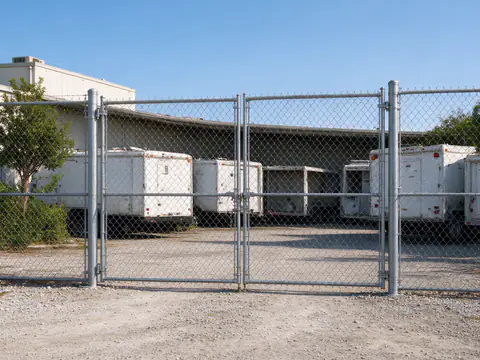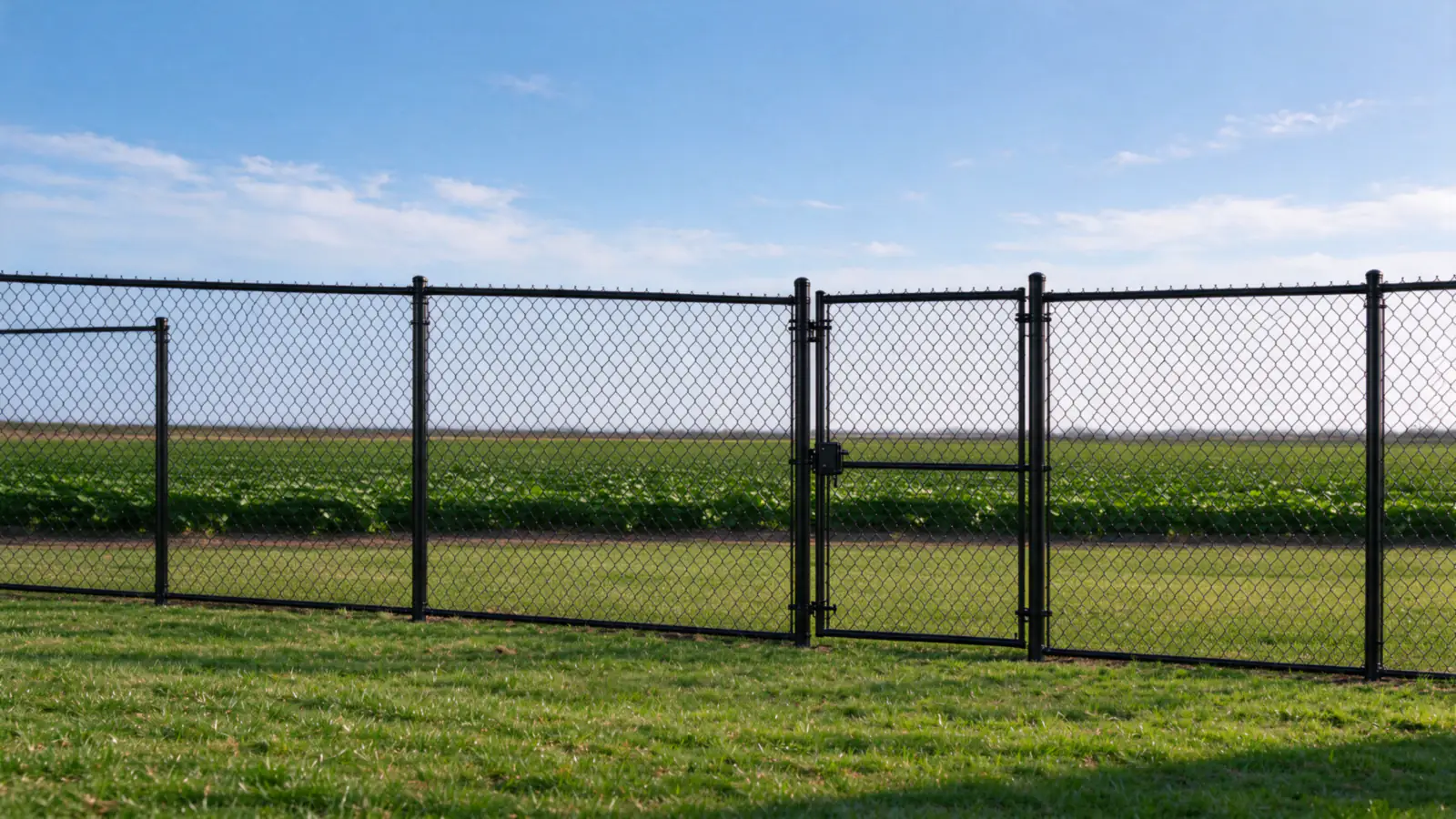
Need a lot of fence without a big bill? Rancho Oxnard Fence builds chain link fences for homes and small lots around Oxnard. Chain link fences a back lot, a side yard or a dog run for less per foot than anything else, lets light and air through, and lasts a long time when we build it with the right frame and coating for the coast.
Is chain link right for your yard?
It usually is for:
- Back lots and side yards where you do not need a solid fence
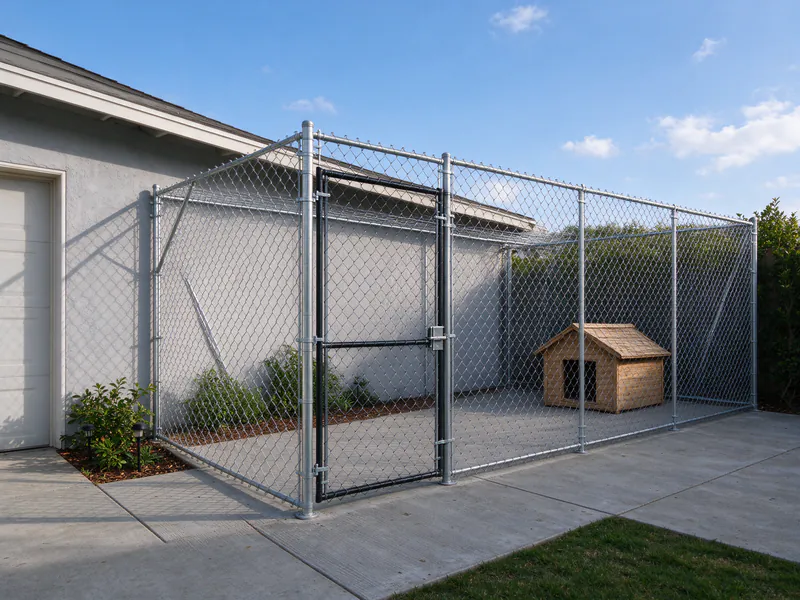
- Dog runs, where strength, a view out and a dig-proof bottom matter more than looks
- Long runs where cost per foot decides it
- Utility fencing around a garden, equipment or storage
For a front yard with a view, a low aluminum fence looks better. For privacy, wood or vinyl usually beats chain link with slats; see privacy fences.
Planning your run
When we walk your property, we settle the parts that decide how it performs:
- Height. 4 ft marks a boundary and keeps most dogs in; 5 to 6 ft suits side yards and back lots.
- Fabric. Galvanized or vinyl-coated, standard or heavier wire, standard or tighter mesh.
- Frame. Line posts, heavier end posts at corners and gates, and a top rail or tension wire.
- Gates. Walk gates and drive gates, single or double.
- Rules. The height for each run, and on a corner lot the clear view near the street.
Your estimate lists the fabric, coating, post sizes and gate sizes line by line.
How we keep it tight
A chain link fence works on tension. The fabric is stretched between end posts, and those posts carry the load, so when chain link sags the cause is usually an end post, not the fabric.
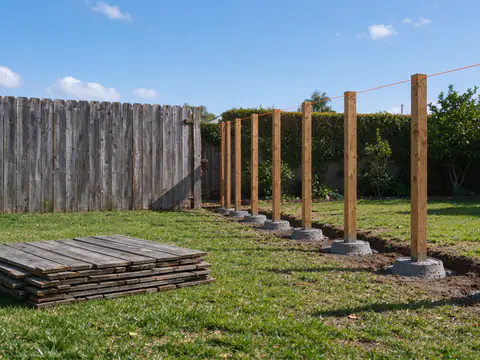
- End posts are heavier than line posts and set in bigger footings, which we make wider or deeper in Oxnard’s loose sand.
- Braces and truss rods stiffen end posts on long runs and at gates.
- A top rail or tension wire keeps the top straight, and a bottom tension wire stops the fabric from being pushed out at the base, which matters if you have a dog.
In the rainy months we pour each hole the day we dig it, before groundwater collects. See fence posts in sandy soil.
Will it rust near the beach?
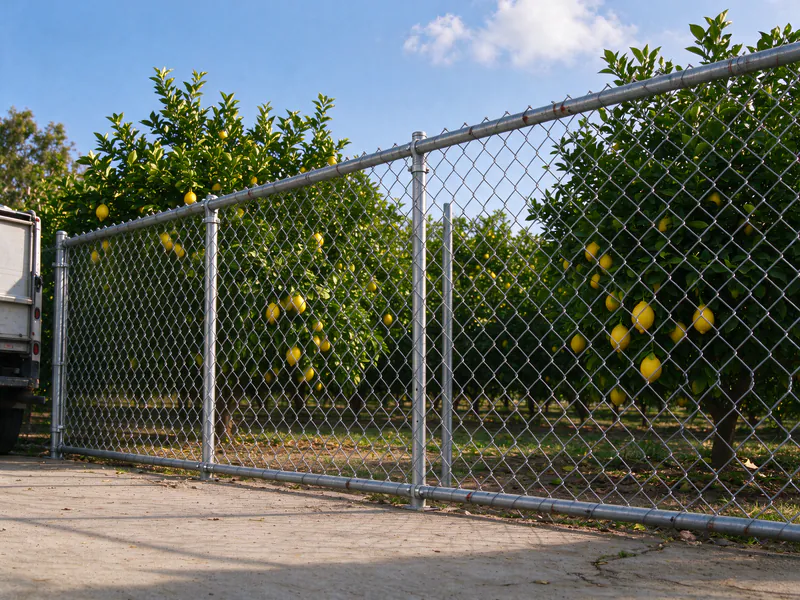
Plain galvanized will, sooner than you would like. Much of central Oxnard’s soil eats bare steel, and near the harbor and the beach the salt spray adds to it. Zinc is what protects galvanized wire, and it wears away fastest here. So we offer:
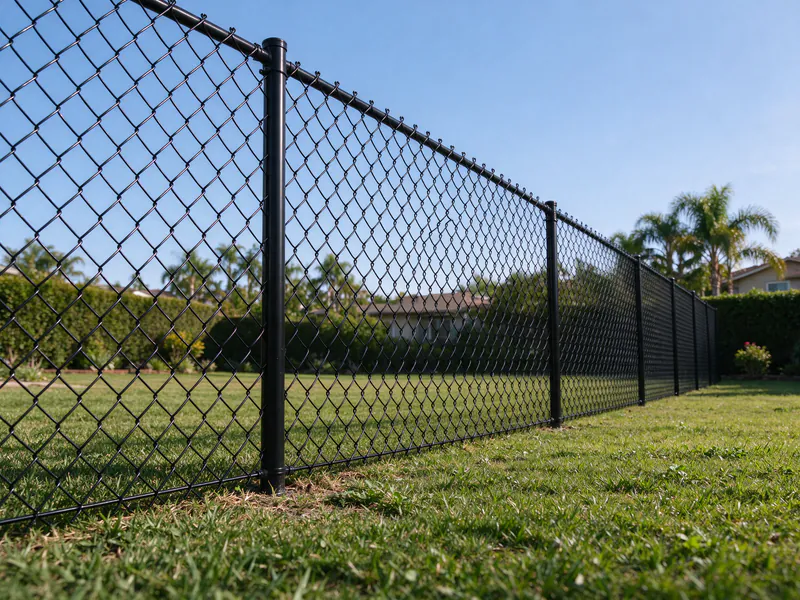
- Vinyl-coated fabric, black or green, which adds a layer over the zinc and protects the wire longer
- Coated posts and frame to match, which resist rust at the ground
- Stainless or coated ties and hardware, so the small parts do not rust out first
For more on materials by the water, read coastal fence materials.
Want the coating and frame in writing?
Our estimate names the fabric, coating, post sizes and braces for your run.
Privacy slats
Slats woven into the fabric add screening for less than a solid fence, but they also turn it into a windbreak. Santa Ana gusts reach the Oxnard plain, so we put heavier end posts and braces on a slatted run. Slats are their own line on your estimate. See Santa Ana winds and fences.
Keeping your dog in
Chain link makes a practical dog fence because it is strong and lets your dog see out.
- A bottom tension wire, plus a buried wire apron or a concrete mow strip, stops digging in sandy yards
- Height matched to your dog: 4 to 5 ft for most, more for jumpers
- Gates that close and latch on their own, with latches out of your dog’s reach
See the best fence for dogs.
Gates
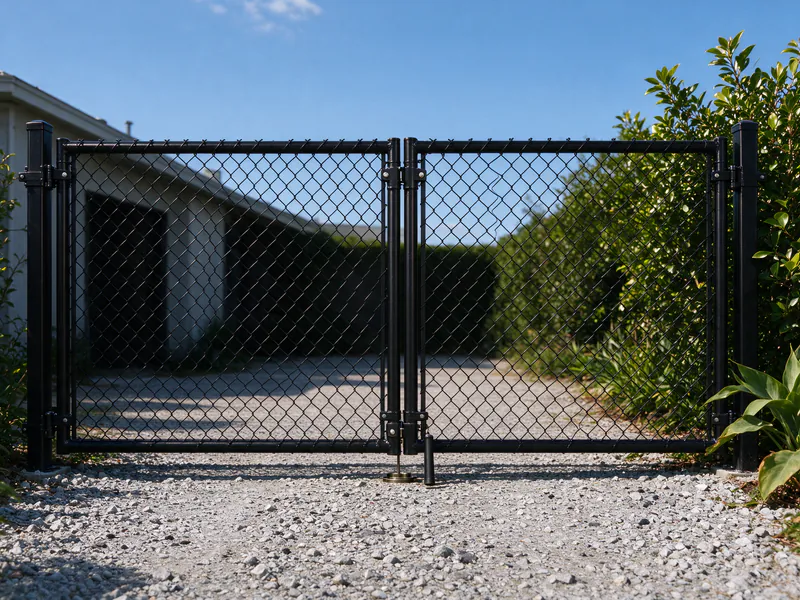
We build walk and drive gates in matching fabric on heavier frames. Double drive gates get drop rods and a center stop so the wind cannot swing them open, and wide ones get posts sized for the swing. On a short driveway, a rolling chain link gate can fit better. See gate installation and driveway gates.
Slopes and uneven ground
Chain link follows the ground better than most fences. On a gentle slope we stretch the fabric along the grade so the bottom stays close to the ground; on a steeper one we step the run between end posts. If you have a dog, we close the gap under the fabric with a bottom tension wire near the soil and fill or block any dips.
Replacing old chain link
Near the coast, old chain link usually comes out because the fabric and posts have rusted through. We remove the fabric, frame and footings and clean the line before new posts go in. A lot of owners replace it with vinyl-coated chain link for about the same money, or move to wood or vinyl for privacy. Removal and haul-away typically adds about $3 to $8 per linear foot.
What does chain link cost?
Rancho Oxnard Fence’s typical range for residential galvanized chain link, 4 to 6 ft, is about $18 to $38 per linear foot installed. A 4 ft fence sits near the low end; 6 ft and vinyl-coated fabric push toward the top. Gates and slats are separate lines, and removing an old fence adds about $3 to $8 per foot. See the Oxnard fence cost guide.
Repair, or replace?
We can fix bent top rail, torn fabric and leaning end posts without replacing the run. When the fabric and posts have rusted through along the whole line, replacing makes more sense, often in vinyl-coated chain link or a different material. See fence repair and fence replacement. For lots, yards and business sites, see commercial fencing.