Rinse a beach-area metal fence with fresh water a few times a year, touch up every chip and scratch before it spreads, keep soil and mulch off the post bases, and use stainless or matching hardware. Rust starts in small places. Catch it there and a steel fence lasts years longer.
At Rancho Oxnard Fence we install and repair metal fences and gates near Oxnard’s beaches, the harbor and Port Hueneme, where salt is in the air every day. Here’s the upkeep that keeps your steel or iron fence in shape. If you are still choosing a material, start with the best fence material for coastal areas.
Where rust starts
A well-coated steel fence does not rust in the middle of a clean rail. It rusts where the coating is broken or where water sits. Look first at four places:
- Chips and scratches from mowers, bikes, ladders and gates swinging into things.
- Cut ends and welds, where a fabricator cut through the coating.
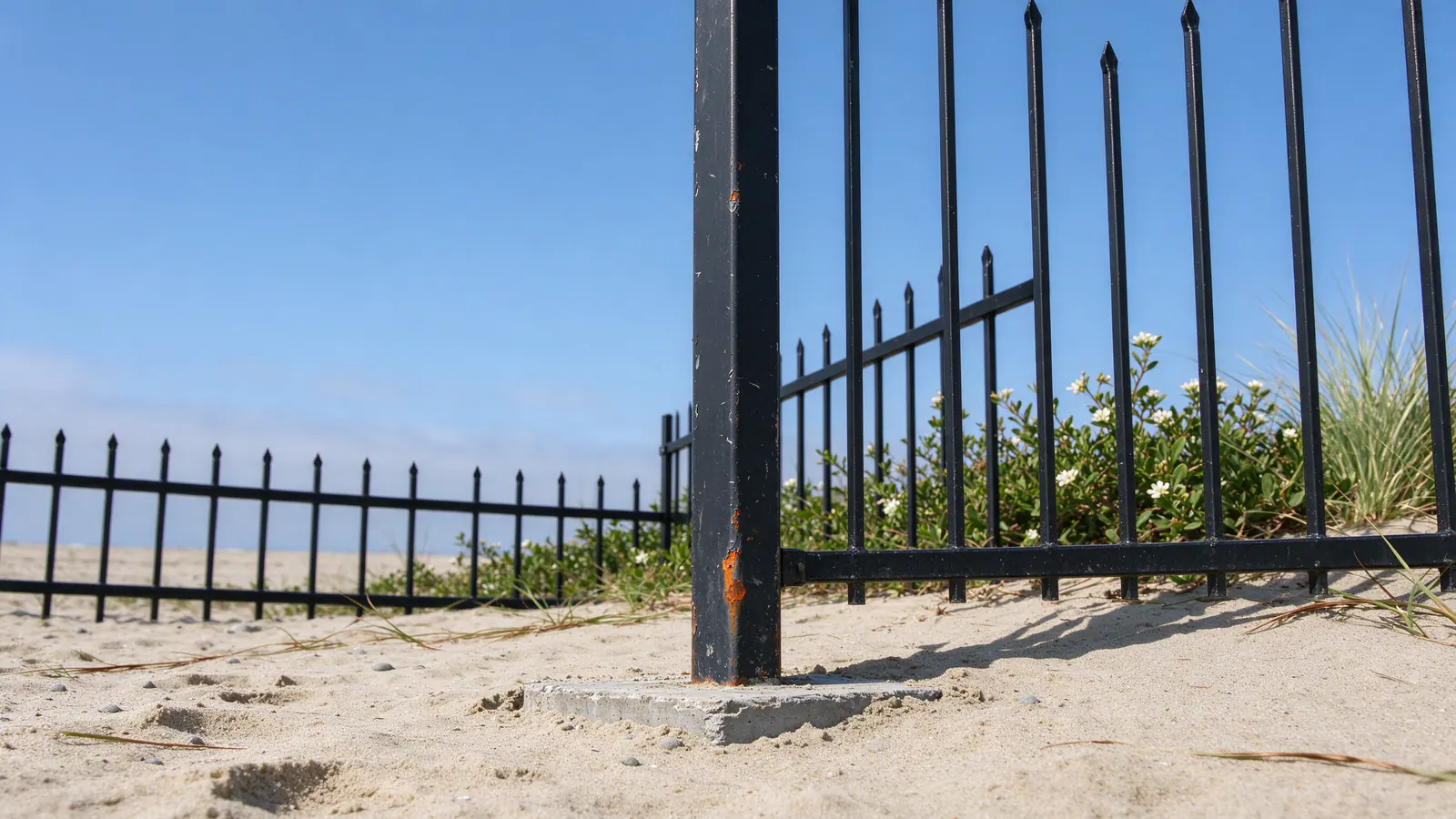
- The post base, where soil, mulch or sprinkler water keeps the steel damp.
- Hardware, especially screws and hinges of a different metal than the fence.
Rinse the salt off
Salt is hygroscopic, meaning it pulls water out of the air and holds it on the metal. Fog and onshore breeze leave a thin salt film that keeps a fence damp long after the sun comes out. A gentle rinse with a garden hose, two to four times a year and after a stretch of heavy spray, washes that film off. Skip pressure washers on painted metal; they can lift a coating at its edges.
Fix chips while they are small
A chip the size of a coin is a five-minute job. Sand or wire-brush the spot to bright metal, wipe it clean, prime it with a rust-inhibiting metal primer and top-coat it with exterior metal paint in a matching color. Left alone for a season near the beach, the same chip spreads under the surrounding paint and lifts it in flakes. Walk the fence each spring and fall with a small can of paint in hand.
Gates need the most attention
A gate moves every day, so its hinges wear through their coating first and its latch collects salt in the moving parts. Rinse and dry the hinges, then add a light coat of a marine-grade lubricant. A gate that has started to drag wears the coating off its own bottom rail. See gate installation.
Keep the post bases dry
The bottom few inches of a post work hardest. Pull soil, bark and mulch back so the concrete collar is exposed. Point sprinklers away from the fence line. If water pools around a post after rain, the footing is the problem: a concrete collar should slope away from the steel. USDA rates the soil in much of central Oxnard as highly corrosive to uncoated steel, so a post that stays wet at grade is on borrowed time. See posts in sandy soil.
Rust at the base of your posts?
Send a photo of the worst post. Some can be cleaned and sealed; others need a new post set in a fresh footing.
Match the hardware
When two different metals touch in salty moisture, one corrodes faster. A plain steel screw in an aluminum rail, or a zinc-plated latch on stainless, will rust at the joint. Use stainless fasteners on aluminum and coated steel, and replace rusty hardware with stainless or hot-dip galvanized parts rather than the bright plated ones sold as general-purpose.
Know when to stop patching
Upkeep can’t bring back metal that has gone. If a post flexes at the ground, a rail has holes, or rust lifts in thick layers, that piece needs replacing. Where most of the fence has reached that point, a switch to powder-coated aluminum, which does not rust, is often the better long-term buy. See aluminum fences, fence repair and the cost guide.