Is salt air eating your fence in Carpinteria? Rancho Oxnard Fence installs and replaces fences and gates in this beach town on US 101, just across the Santa Barbara County line, about 23 miles up the coast from Oxnard past Rincon. Carpinteria has called its shoreline the World’s Safest Beach since 1912, and for your fence, what matters here is salt air, damp ground and the coastal zone.
Salt air, not fire
Unlike most towns we serve, Carpinteria has essentially no mapped Very High or High fire hazard inside the city: CAL FIRE shows 0 acres of either and about 14 acres of moderate. What wears your fence out here is the ocean. Salt rides well inland on the breeze and settles on every rail, screw and hinge. Bare steel and plain galvanized parts rust first, and a fence often fails at its fasteners long before the boards or panels go.
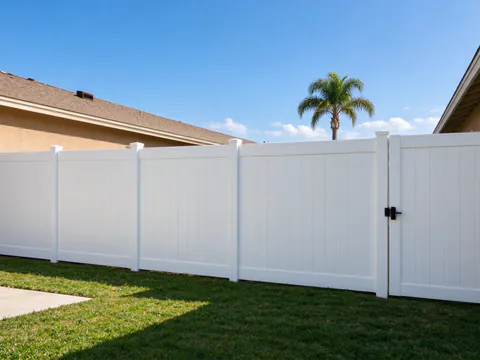
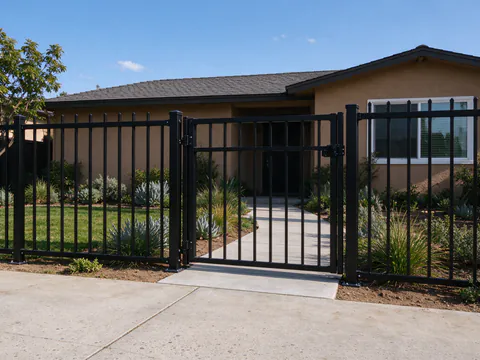
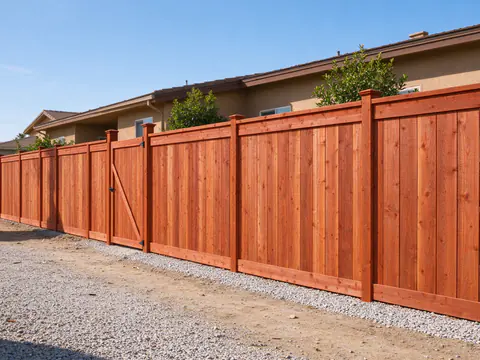
That changes what we recommend. Vinyl won’t rust or rot and is the usual pick for back-yard privacy. Powder-coated aluminum keeps a front yard open. Wood works with ground-contact rated posts and stainless screws. See coastal fence materials and vinyl fences.
Will posts hold in damp sand?
A USDA sample near the shore shows beach soil rated poorly drained. That point sits close to the sand, and ground farther inland is firmer, but much of the town is low and damp, especially near the Carpinteria Salt Marsh Reserve and El Estero.
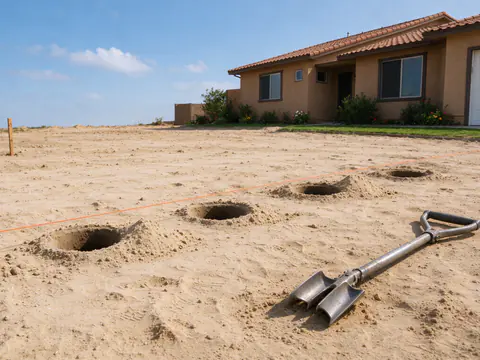
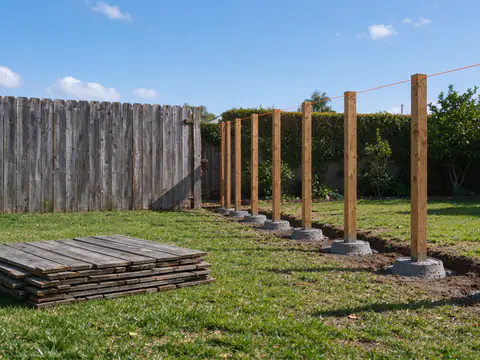
Damp sand grips a post poorly. We dig footings deeper and wider, with gravel at the bottom so water drains away from wood. Gate posts go deepest, since a swinging leaf pulls hardest on them. See setting posts in sandy soil.
Do you need city or coastal approval?
The City of Carpinteria sets heights and permits, and we confirm them for your address before layout. Part of the city lies in the coastal zone, where a new structure can count as development under the Coastal Act. Many fences around existing homes are routine, but if your lot is near the beach, the Bluffs or the salt marsh, we check with the city first.
Fence near the beach in Carpinteria?
Send the address and a photo. Your estimate covers footings, hardware and any coastal question for the lot.
Cottages near the sand
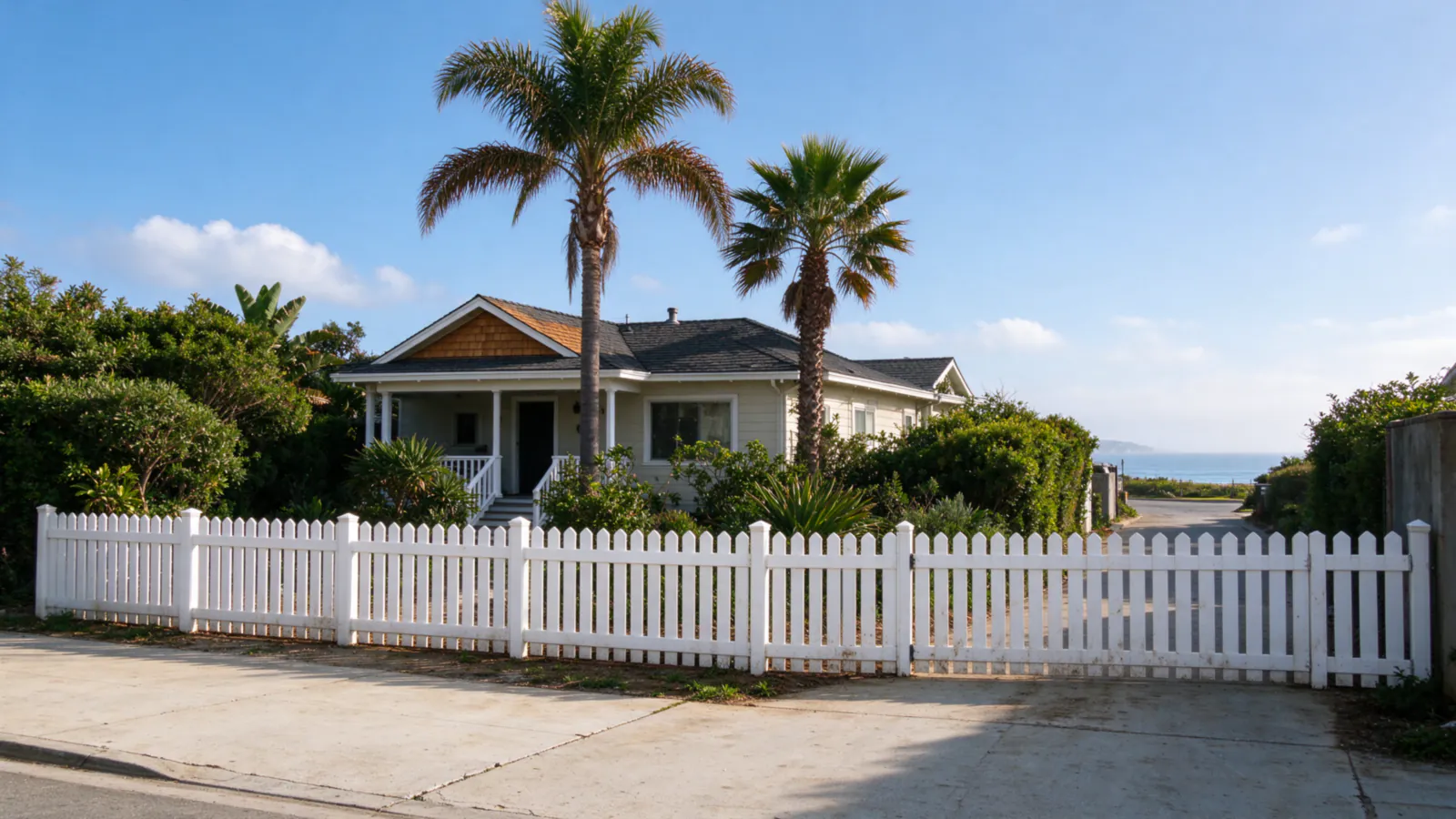
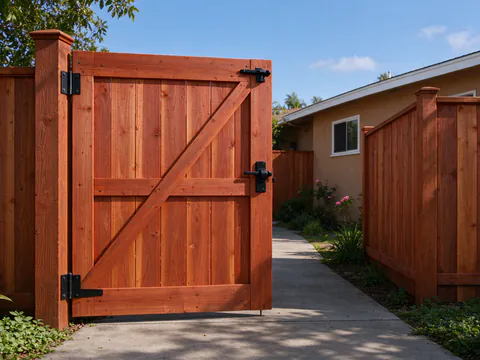
The blocks nearest the sand hold older cottages on small lots. The usual pattern is a low vinyl or wood picket in front and a privacy fence behind, with stainless hardware throughout. Gates here see salt and sand every day, so we fit stainless or heavy powder-coated hinges and latches. See gate installation.
Downtown and Linden Avenue
Around Linden Avenue and the older downtown blocks, front fences stay low and open and side fences give privacy. Many wood fences there have rusted nails and posts gone soft at grade. Replacing on new footings usually beats patching. See fence replacement.
Lots by the Bluffs and the marsh
The Carpinteria Bluffs hold a harbor seal rookery that’s closed to people from December to May, and the salt marsh is a protected reserve. Lots near either take the most wind and salt, and they’re the most likely to raise a coastal-zone question. Open designs and corrosion-proof materials suit those edges best.
Wind off the water
Afternoon sea breezes blow onshore most days, and winter storms bring stronger gusts off the channel. A tall solid fence facing the beach takes that wind square on, and a post in damp sand has less grip to resist it. We keep a privacy line straight with shorter spans, heavier posts and steel inserts inside vinyl posts. If you don’t need privacy, an open aluminum fence lets the wind and the view through. See aluminum fences.
Up in the foothills along SR 150 and SR 192
North of US 101, roads climb toward the foothills along SR 150 and SR 192. Some of that land sits outside city limits, where Santa Barbara County rules apply instead, and we check the fire map there separately from the low numbers inside the city. On those lots we confirm the rulebook for your address and plan metal where the fence meets the house. See fence installation.
How your Carpinteria job runs
At the visit we check the line, the ground at a corner and whether your lot is in the coastal zone. Your itemized estimate lists the hardware grade next to posts and panels. We have DigAlert marks down at least two working days before we dig. In the wet months we dig and pour holes the same day so damp sand doesn’t cave in. Gates go up last.
Sharing a fence with the cottage next door
Small lots mean most fences are shared. California presumes you and your neighbor split the reasonable cost of a boundary fence, with 30 days’ written notice under Civil Code 841. See who pays for a shared fence.
Keeping a dog in a sandy yard
Dogs dig through sand easily, so on a beach-area lot we can add a buried wire apron or a concrete mow strip along the bottom. A gate that swings shut and latches on its own keeps your dog in when the yard opens onto a busy beach street. Vinyl or coated chain link holds up in the salt where bare wire would rust within a few seasons. See the best fence for dogs.
What does a Carpinteria fence cost?
Our typical ranges apply: about $35 to $75 per foot for vinyl privacy, $35 to $100 for ornamental aluminum and $30 to $70 for 6 ft wood, installed. Deeper footings and stainless hardware are the local additions. See the cost guide.