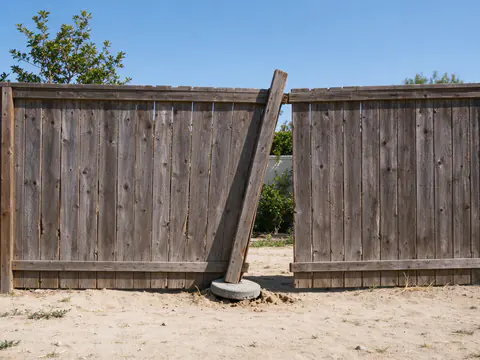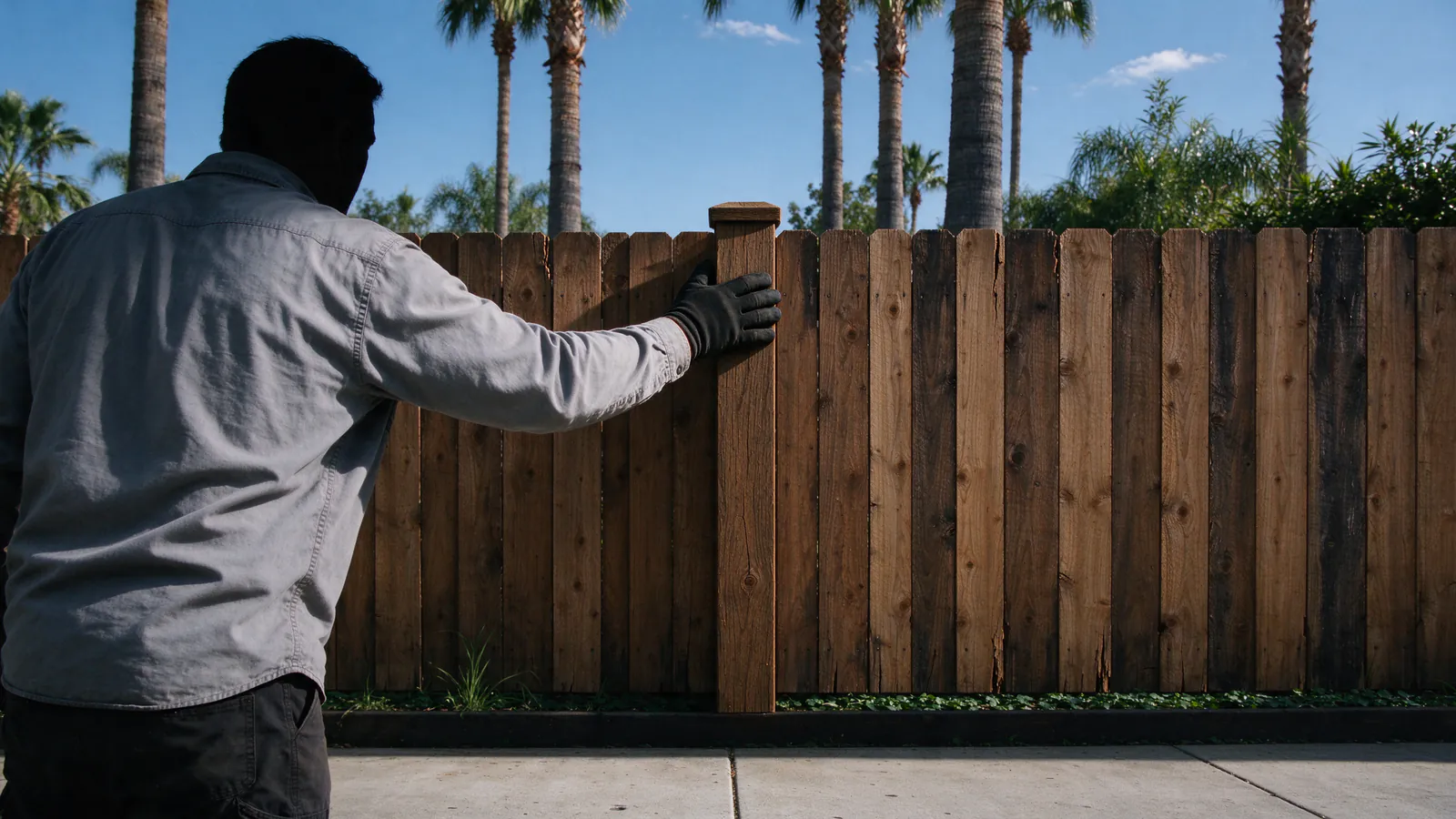
Before Santa Ana season, rock every post by hand, check gate hinges and latches, fasten loose boards, and clear anything piled against the fence. A weak post found in October is a quick repair. The same post found by a 60 mph gust is a fallen section.
Want your fence to make it through the wind season? At Rancho Oxnard Fence we repair wind-damaged fences across Oxnard, and a fence that fails in a gust usually shows a warning sign first. This checklist walks you through what to look at, in the order it usually fails. For the engineering behind it, read how much wind a fence can take.
Why the wind finds the weak spot
Santa Ana winds blow from the northeast, off the mountains and down to the coast, mainly in fall and winter. The usual breeze in Oxnard comes off the ocean, so these gusts push on the other face of the fence. The National Weather Service has warned of damaging gusts of 50 to 70 mph across the Ventura County coastal plain, reaching the beaches. A solid 6 ft fence works like a sail, and all of that load ends up at the base of the posts.
The checklist
Posts first
Every fence that falls in a windstorm fails at a post, either because the wood has rotted at the soil line or because the footing has loosened in the sand. Push at the top of each post. A little flex is normal; a post that rocks back and forth, or that has a gap around it at grade, is the one to deal with. On wood posts, probe an inch or two below the soil. If the screwdriver sinks in, the post has rotted where you can’t see it. See setting posts in sandy soil.
Gates
A gate is a big flat panel on one post, and wind loves it. Check that the hinge screws are tight, the latch catches cleanly and the gate stays shut on its own. A gate that swings in the wind batters its post and hinges in a single night. If it already drags or sags, read how to fix a sagging gate. During a wind warning, keep gates latched, or tie them closed if the latch is weak.
Boards, pickets and panels
Loose boards rattle, then tear off and take others with them. Re-fasten them with exterior screws, stainless near the beach. On vinyl, check that panels are fully seated in the posts and that caps are on. A missing cap lets wind and water into a hollow post.
What is leaning on it
Firewood stacked against a fence, a trash bin wedged in a side yard, or a vine grown into the boards all add load. They also add fuel when the same dry winds bring fire weather. Pull them back a few feet.
Found a post that moves?
Send a photo of the post and the run around it. A single post can often be reset before the wind arrives.
After the wind
If a section does come down, keep children and pets away from loose panels and don’t try to lift one in wind. Take photos before you move anything, from far enough back to show the whole run and close enough to show the post bases. Those photos help with any claim. See fence damage and insurance. Emergency calls are taken outside normal hours, and a temporary fix to close the gap is priced separately from the permanent repair. See emergency fence repair.
When a check turns into a rebuild
If many posts move or the wood is soft all along the line, patching one post at a time costs more than it saves. That is the point to plan a fence replacement on new footings, with posts sized for the wind your lot actually gets.