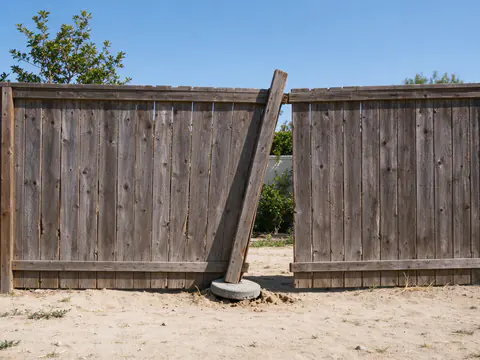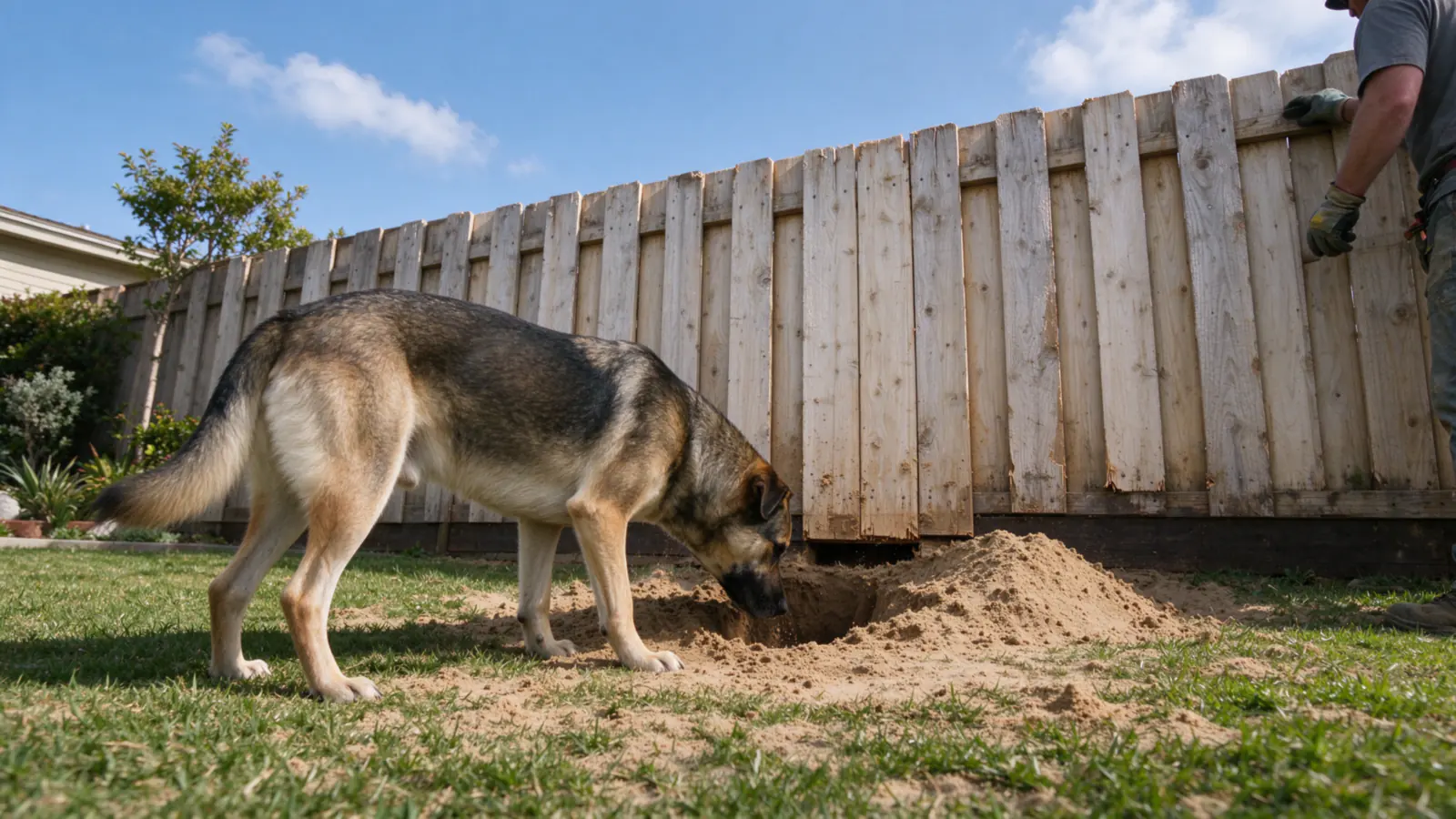
The reliable fix is to make the bottom of the fence undiggable: a wire apron laid flat along the inside of the fence, a concrete or paver strip under the bottom rail, or mesh buried below grade. Then close every gap under gates and stepped panels, and give the dog an easier place to dig.
Is your fence sound everywhere except the bottom few inches? At Rancho Oxnard Fence we build and repair dog fences across Oxnard, and the bottom edge is where a digger gets out. In Oxnard’s sandy yards, a dog can open a gap under a fence faster than in clay or loam, and the hole tends to grow each time. This post covers the fixes that work. For choosing a whole new fence, read the best fence for dogs.
Why the dog is digging
Digging along a fence is usually one of a few things: boredom, a smell or animal on the other side, a cool spot in hot weather, or a real wish to get out. Notice where the holes are. Holes at one corner near a neighbor’s dog point to curiosity; holes all along the line point to a dog that wants out. Fixing the fence handles the escape. The reason still matters, because a bored dog will find the next weak spot.
Fix 1: a wire apron
An apron is a strip of galvanized or vinyl-coated welded wire, about 12 to 24 inches wide, laid flat on the ground along the inside of the fence and fastened to the bottom rail or posts. Pin it down with landscape staples. A dog digs where the fence meets the ground, hits wire, and stops. Grass and soil grow through it within a season. Near the beach, use vinyl-coated wire so it doesn’t rust away.
Fix 2: a mow strip
A narrow concrete strip, or pavers set in a line, under the bottom of the fence does the same job and also keeps a trimmer off wood boards. It suits a new fence or a rebuild best. In sand, the strip is set on a compacted base so it doesn’t settle and open a gap underneath. See posts in sandy soil.
Fix 3: buried mesh
For a dog that digs deep, hardware cloth or welded wire buried 12 inches or more below the fence line, fastened to the bottom rail, stops a tunnel. It means trenching along the whole run, so it is usually done when a fence is being built or replaced. See fence replacement.
Dog getting under the fence?
Send a photo of the bottom of the fence. A wire apron or new bottom boards often fix it in one visit.
Close the gaps that already exist
- Under gates. Gates often hang a few inches up. A gate that sags drops at one corner and opens a gap at the other. Rehang or brace it. See how to fix a sagging gate.
- Under stepped panels. On a slope, each step leaves a triangle-shaped opening. Fill it with a kickboard or wire.
- Rotted bottom boards. Wood that touches damp soil rots first. Replace it, and consider a pressure-treated kickboard that can be swapped out later. See wood fence care.
Give the dog a better option
A shaded spot, more exercise and a dedicated digging pit filled with loose sand away from the fence take the pressure off the line. Bury a toy in the pit to teach the dog that it’s the place to dig. Combined with a closed fence bottom, most diggers stop within weeks.
If the fence itself is past saving, fence repair can tell you whether a few boards and an apron will do or whether a new line on fresh footings is the better buy.