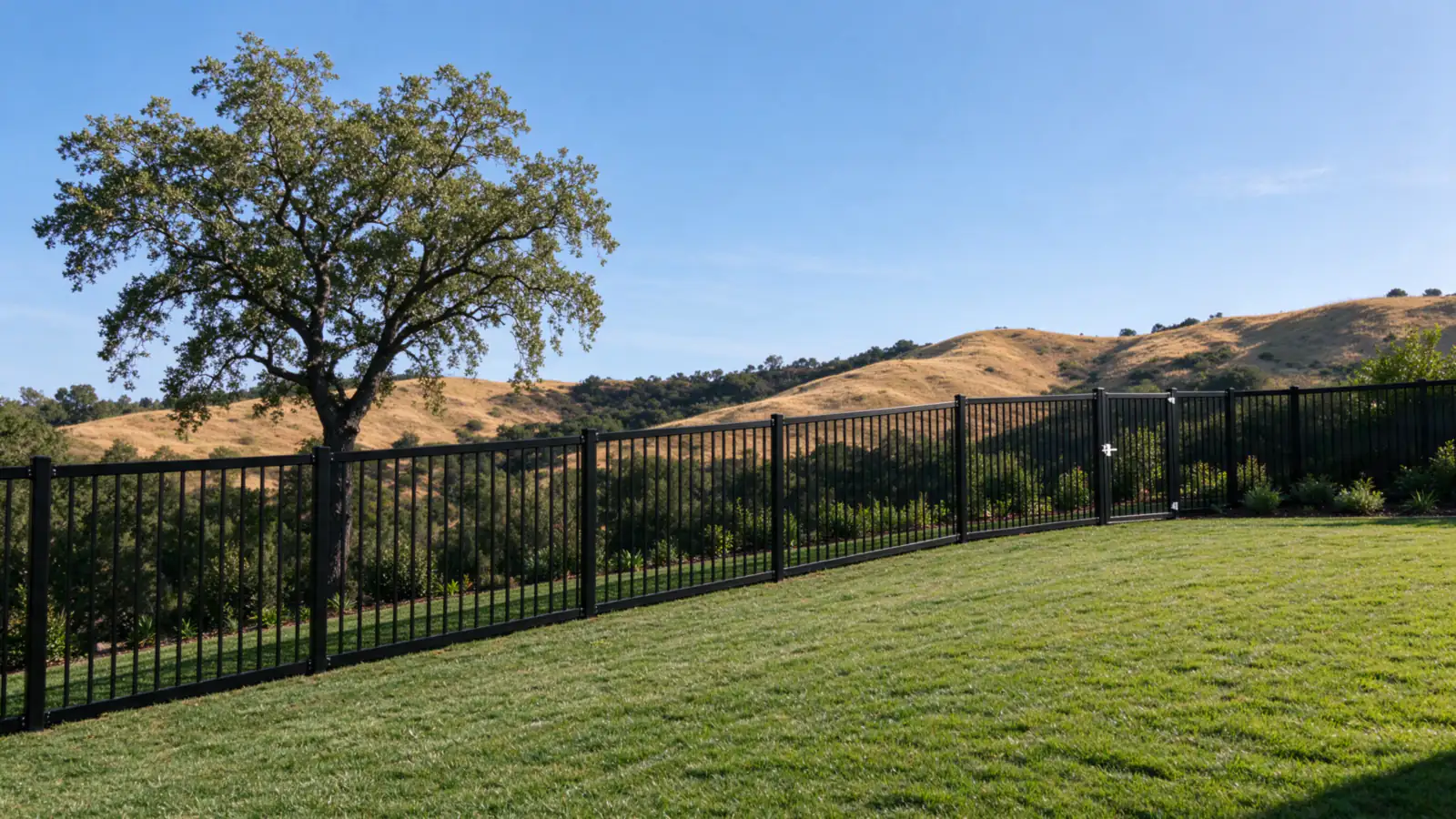
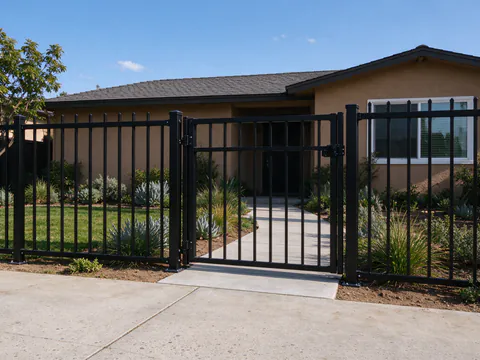
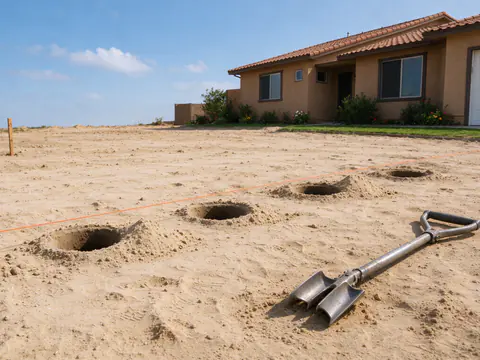
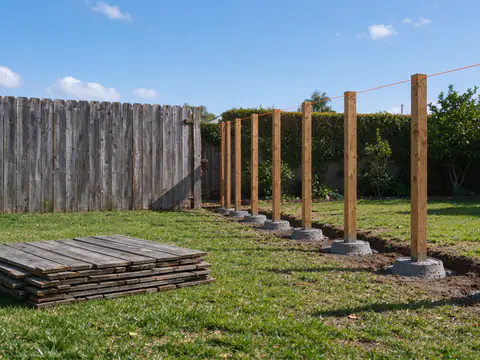
Building a fence on a Thousand Oaks hillside, near an oak or against open space? Rancho Oxnard Fence builds and replaces fences and gates across Thousand Oaks, including Newbury Park, Dos Vientos and the streets near Westlake and North Ranch. Thousand Oaks is the heart of the Conejo Valley, about 19 miles east of Oxnard, and fences here answer to very different conditions: hillside clay, native oaks, open space on every side and some of the highest wildfire mapping in the county.
What’s different about a Thousand Oaks fence?
Fire comes first. CAL FIRE maps about 24,867 acres of Thousand Oaks’s local responsibility area as Very High fire hazard, out of roughly 35,000 acres of city land, and designated open-space nature areas covered 34% of the city in 2017. The 2018 Woolsey Fire burned across Ventura and Los Angeles counties, charring almost 100,000 acres and destroying nearly 400 structures in the region.
Defensible-space law already applies to homes in those zones, and the state’s draft ember-zone regulations single out fences: no new combustible fence within 5 ft of a house, and a noncombustible piece where it attaches. On Thousand Oaks hillsides, we make that attachment piece metal on nearly every job.
Oaks come second. Thousand Oaks had roughly 50,000 to 60,000 oak trees in 2012: valley oak, coast live oak, scrub oak and Palmer’s oak. If an oak stands near your line, we lay the fence out to avoid its large roots and place posts between them, and work inside a protected tree’s root zone may need city review. We check that at the site walk, before any digging.
Soil is third. A USDA sample in Thousand Oaks shows Diablo clay on 15 to 30 percent slopes, well drained, rated high for steel corrosion and moderate for concrete. Clay holds a post well when dry but moves as it wets and dries, and steep lots mean stepped panels.
We use steel posts coated for this soil. The City of Thousand Oaks decides heights and permits inside its limits, and we check them address by address; Lynn Ranch and Oak Park, outside the line, answer to the county. No part of the city is in the coastal zone.
How your Thousand Oaks job runs
On the first call we find out whether your lot backs onto open space and whether an oak stands near the line. At the site walk we map the tree’s root zone first and place posts around it, then measure the slope to choose stepped or racked panels.
If a protected tree is involved, city review comes before digging, along with DigAlert’s two working days. We dig the clay and pour footings for the downhill load, put the metal attachment panel in at the house, and hang gates last.
Which material suits a hillside lot?
- Aluminum and steel won’t burn, keep your view of the open space and suit the section by the house. Steel needs coatings for the corrosive clay. See aluminum and iron fences.
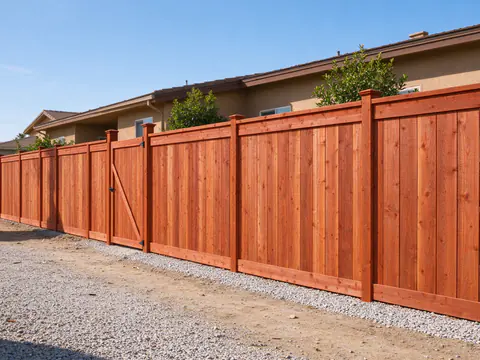
- Wood works farther from the house, for back-yard privacy where fire mapping allows.
- Vinyl needs little care; like wood, we keep it away from the house in fire zones.
For a comparison, see vinyl vs wood and coastal fence materials, which covers corrosion-resistant hardware.
Backing onto open space?
Your estimate covers the metal section by the house, the slope and any oak on the line.
Does your back yard drop away?
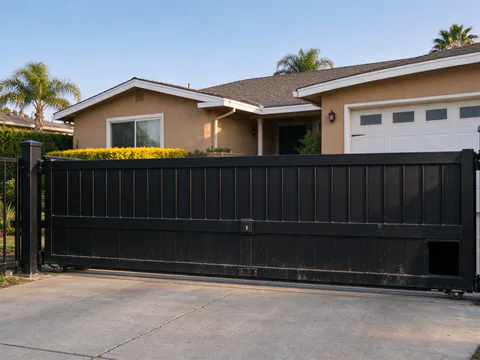
Most Thousand Oaks lots have some grade, and many back yards drop steeply. We step panels down in level sections on steep ground or rack them along gentle grades. Each post is set for the downhill load, and stepped sections leave gaps underneath that we fill if you have a dog. Gates go where the ground is level enough to swing, or a rolling gate replaces a swing gate on a sloped drive. See driveway gates.
Wind through the passes
Santa Ana winds funnel through the Conejo Valley’s passes and grades. Solid fences on ridgelines and exposed corners need heavier posts or a see-through design. The wind guide explains the loads.
Rebuilding after a fire season
Fences near open space take heat, ash and wind damage even when homes are spared. When you rebuild, that’s the time to move the section next to the house to metal and set new posts for the slope. See fence replacement and fence repair.
Newer tracts and planned neighborhoods
Newbury Park makes up about 40% of the city’s land, and developments such as Dos Vientos, with about 2,350 homes, were planned as whole communities. Neighborhoods like these often expect one fence style, height and color along the street, so check any community guidelines alongside the city’s rules before you pick a material or color for the street side. Westlake and North Ranch, built as master-planned communities, are similar.
A fence at the edge of open space
Where your yard ends at a trail or open-space boundary, the fence is the line between a managed yard and wild land. See-through metal keeps the view and won’t burn; solid fences there catch both wind and embers. A gate onto a trail, if allowed, gets the same metal build as the section by the house, and a latch that closes on its own so pets stay in when the gate is left loose.
One plan for fire, trees and slope
Your fence has to satisfy the fire map, the oaks and the grade at once, and each pushes the design in a different direction. We settle them together at the site walk, which costs far less than finding a root, a rule or a step after the first posts are set.
What does a Thousand Oaks fence cost?
Expect our typical ranges: about $30 to $70 per foot for a 6 ft wood privacy fence and $35 to $100 for aluminum or steel picket, installed. What pushes a Conejo Valley job higher is the ground: steep yards, clay or rock, posts placed around roots, and the metal panels near the house. The cost guide lists each driver.
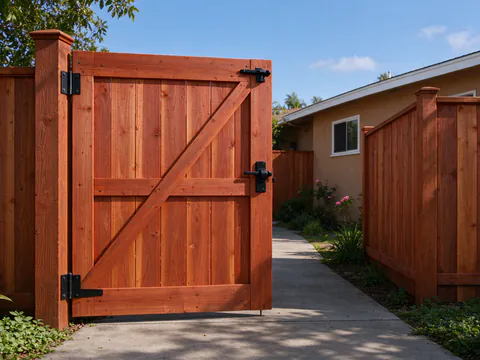
We also handle fence installation, wood fences and gates in Thousand Oaks.