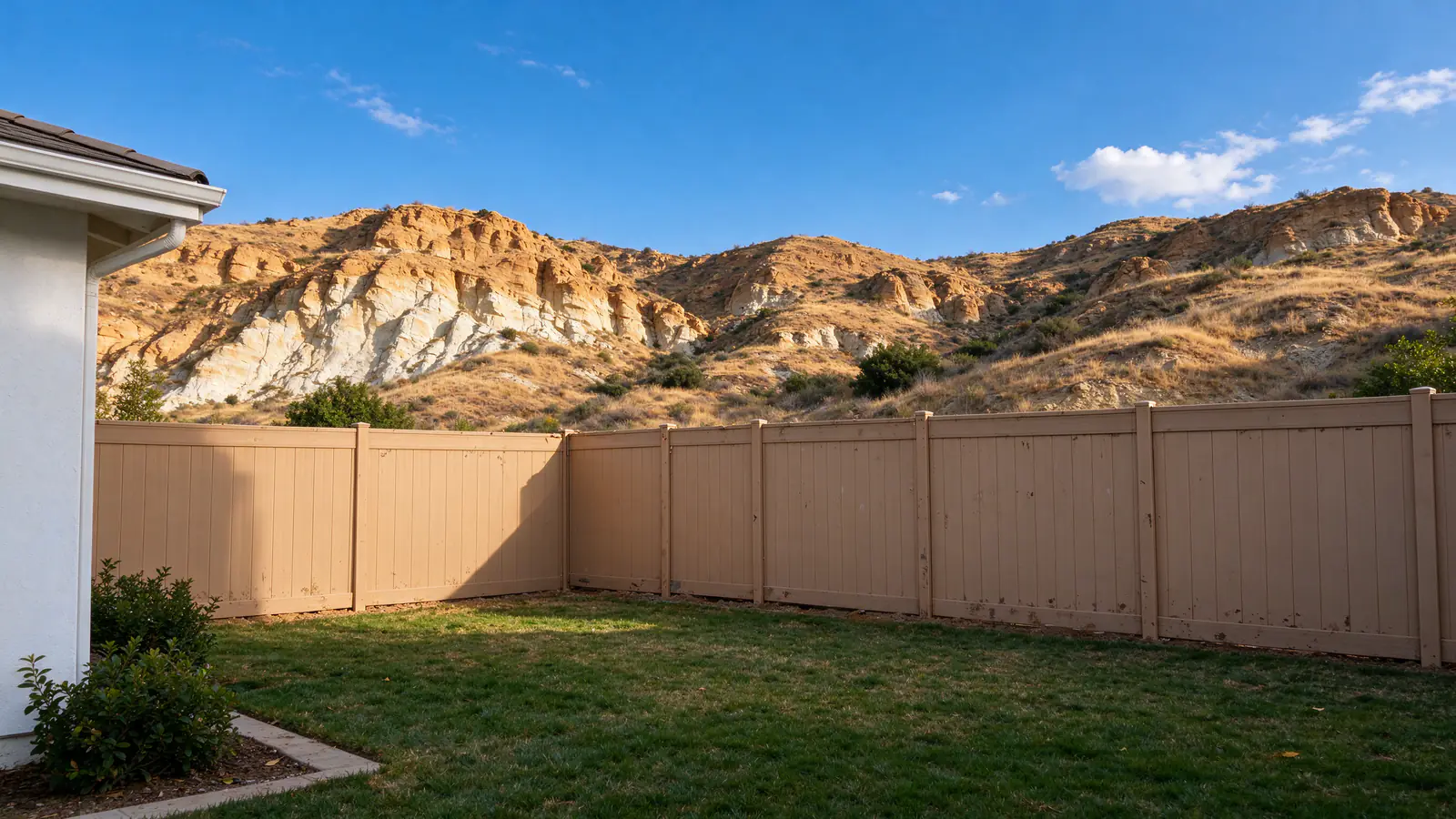
Does your Simi Valley yard back onto the hills, or need a wide gate for the RV? Rancho Oxnard Fence works on fences and gates throughout Simi Valley, from Wood Ranch and Big Sky to Old Town and Santa Susana Knolls. At about 26 miles from Oxnard, Simi Valley is the eastern edge of the area we serve, and fences here live with a different set of conditions: hills on every side, a long wildfire history and wind that funnels through the passes.
What’s different about a Simi Valley fence?
The hills dominate. CAL FIRE maps about 17,630 acres of the land Simi Valley is responsible for as Very High fire hazard, out of roughly 26,600 acres in the city. The Simi Hills, a wildlife corridor largely protected as park and open space, wrap the valley, and the 2003 Simi Fire burned about 108,000 acres.
If your home is in one of those zones, state law already requires defensible space, and draft Board of Forestry rules would keep new combustible fencing out of the 5 ft next to a house and call for a noncombustible piece where the fence attaches. So when your fence backs onto brush, we plan a metal panel or gate at the house.
The valley floor is easier ground. A USDA sample inside the city shows Mocho loam on flat ground, well drained, rated moderate for steel corrosion. Holes stay dry, posts grip well, and the soil isn’t the problem sand is in Oxnard. Slope near the hills and wind are what limit you.
The City of Simi Valley sets heights and permits inside its limits, and we confirm them for your address before layout. Simi Valley lies well outside the coastal zone, so salt air and coastal review aren’t part of your plan. The valley is also ringed by faults, and parts of the city were damaged in the 1994 Northridge earthquake, which is one reason we end fences on their own post beside a house or wall rather than bolting them to it.
How your Simi Valley job runs
On the first call we find out whether your lot backs onto the hills and how you use the yard: a dog, a pool, a trailer. At the site visit we walk the line from the street to the back corner, noting slope, any block wall the fence meets and the brush beyond.
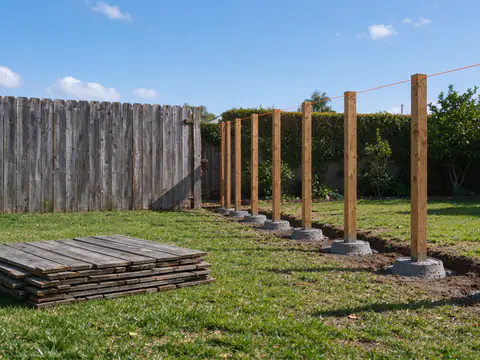
We take height and permit questions to the city and request utility marks at least two working days before we dig. Footings go into the loam, posts are set, panels follow, and gates, especially a wide RV gate, go up last on their own heavy posts.
Wind through the passes
The Santa Susana Pass and the canyons around the valley funnel wind, especially from the northeast in fall and winter. A long solid fence along an exposed edge, or across the top of a slope, takes that wind broadside. Heavier posts, closer spacing, or spaced boards that let air through keep it upright. See wind loads on fences.
Simi Valley lot backing onto the hills?
Send the address and a photo of the back line. Your estimate covers slope, wind and the section by the house.
Which material suits your yard?
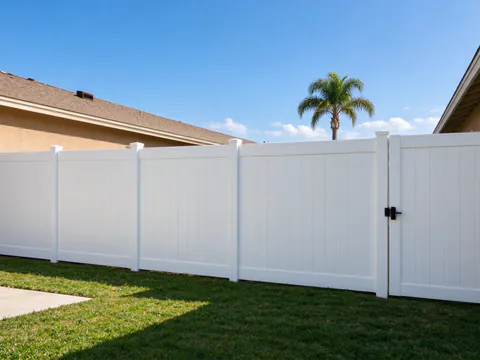
- Vinyl is common for back-yard privacy and needs little upkeep; we add inserts to stiffen posts on windy lines. See vinyl fences.
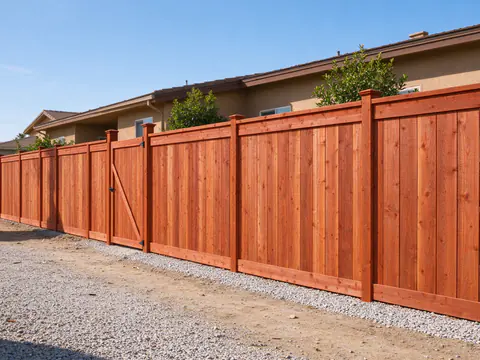
- Wood suits privacy away from the house on fire-mapped lots. See wood fences.
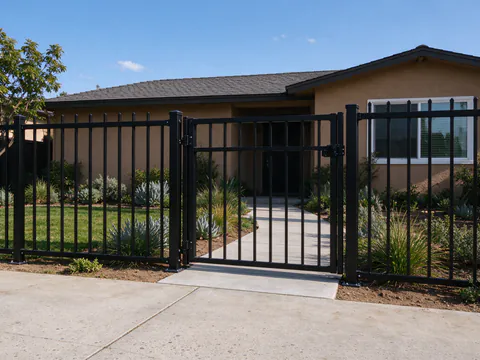
- Aluminum and tubular steel keep your view of the hills and won’t burn. See aluminum fences.
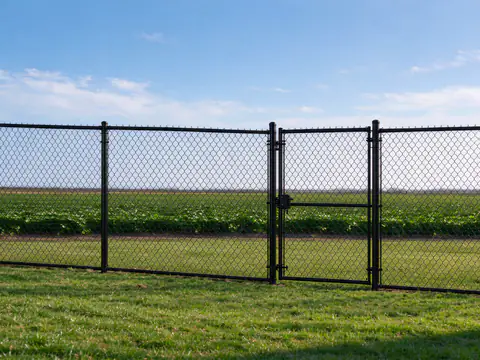
- Chain link works for side yards, dog runs and larger parcels. See chain link.
For a direct comparison, read vinyl vs wood.
A gate wide enough for the RV
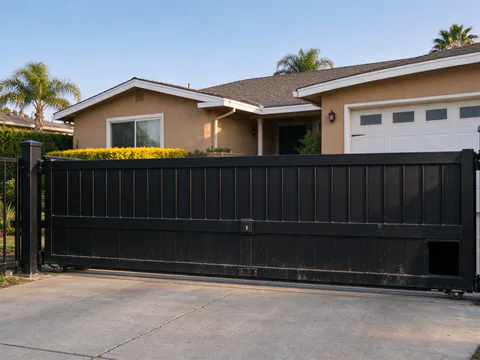
Many Simi Valley lots have room for a trailer, a boat or an RV beside the house. That means a wide opening: a double swing gate on heavy posts with drop rods and a center stop, or a rolling gate if the drive is short or slopes. The clear opening and your vehicle’s turn decide the width. See driveway gates and swing vs sliding gates.
Replacing a fence in an older tract
Neighborhoods such as the Greek Tract and Old Town have fences rebuilt over decades, often on the same failed post line. We start a replacement by confirming the line, then set new posts in fresh footings. On a shared fence, your neighbor is presumed to share reasonable costs after 30 days’ written notice under Civil Code 841. See fence replacement and who pays for a shared fence.
Where your fence meets a block wall
Many Simi Valley yards mix block walls and fences. Where a fence continues a wall line, we end it on its own post just off the wall instead of fastening into it, so each can move on its own. Adding height on top of an existing block wall is a separate question that depends on how the wall was built and the city’s rules.
Keeping a fire-zone fence clear
In mapped areas, brush and dry leaves against a fence carry fire toward your house. A cleared strip along the fence line, and a metal section at the house kept free of stored firewood or debris, does as much as the material you choose.
Dogs and wildlife along the hills
Yards that back onto the Simi Hills meet wildlife as well as fire risk. A dog fence there needs a base your dog can’t dig under, a height it can’t clear and a gate that latches on its own. See-through metal on the back line lets you see what’s on the other side; solid fences give your dog less to react to. See the best fence for dogs.
A front fence on the valley floor
Simi Valley’s tract streets often have open front lawns and driveways side by side, with fences starting at the side of the house. A low aluminum or picket fence can mark your front yard without closing it in, and a side gate set back from the street keeps the front tidy. Front heights are tighter than side and rear heights, and we confirm the city’s limit for your address before layout.
What does a Simi Valley fence cost?
Simi Valley falls in our typical ranges: roughly $30 to $70 per foot for 6 ft redwood or cedar privacy and $35 to $75 for vinyl, installed. Long runs, slope near the hills, metal sections at the house and wide RV gates add to it. The cost guide breaks out each piece.